Quiz Funnel - How to Turn a Short Quiz Into Qualified Leads and Sales (2026)
What Is a Quiz Funnel?
A quiz funnel is a lead generation funnel where the opt-in step is an interactive quiz instead of a static download. Visitors answer a few questions, enter their email to see their result, and then receive follow-up emails and an offer matched to their answers.
Quizzes work because they're about the person taking them. Instead of "download our guide," the promise is "find out which type you are" or "discover your biggest bottleneck." That curiosity makes people more willing to engage, and their answers tell you exactly what they need.
What it means for you: a quiz doesn't just collect email addresses. It segments your list from the first interaction, so every follow-up email can be more relevant.
A quiz funnel personalizes your marketing from the first click
A few engaging questions, an email gate before results, a result page per type, and a matching email sequence and offer for each result.
The Five Parts of a Quiz Funnel
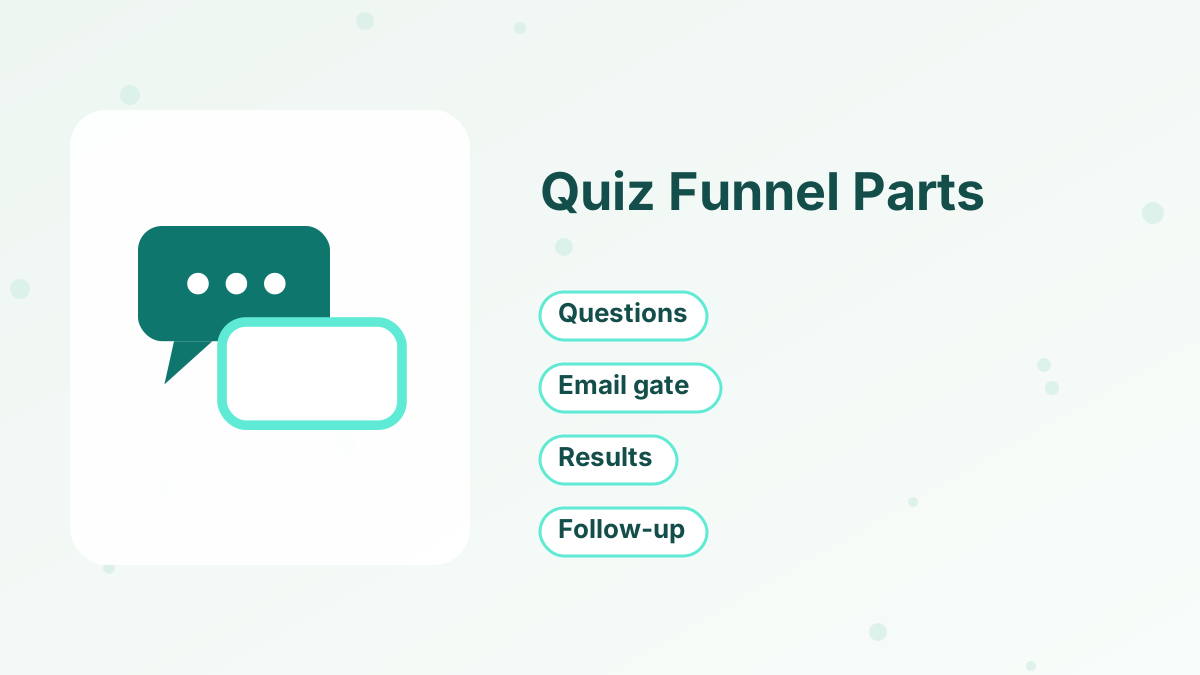
| Part | What it does | Tips |
|---|---|---|
| Quiz landing page | Invites people to take the quiz | Promise a specific, intriguing result |
| Questions | Engage and segment | Five to ten quick questions, mostly multiple choice |
| Email gate | Captures the lead before results | Explain what they'll receive and why it's useful |
| Result pages | Deliver a personalized outcome | One page per result type, each with a next step |
| Follow-up sequences | Nurture by segment | A short email series written for each result |
Each result should lead naturally to a specific offer or next step. A quiz with three outcomes might point to three different products, or to the same product framed differently for each type.
When a Quiz Funnel Makes Sense
A quiz funnel is most useful when your audience has distinct groups with different problems or goals. A fitness coach might serve beginners, people returning after injury and experienced athletes. A business coach might serve new freelancers, established solo businesses and small teams.
It's less necessary when everyone in your audience has the same problem and wants the same solution. In that case, a simple lead magnet funnel may convert just as well with less work. See lead generation funnel.
Good Fit
Several audience types, a range of offers, or a need to qualify leads before a call.
Less Necessary
One audience with one problem and one offer, where a checklist or template works well.
Great Bonus
Even with one offer, a quiz can reveal objections and language you can use in your emails.
How to Plan Your Quiz
Plan your quiz backward, starting with results rather than questions.
- Choose your result typesPick two to four outcomes that match real differences in your audience and your offers.
- Define each resultWrite what each type struggles with, what they need next and which offer fits them.
- Write questions that sortEach question should help decide which result fits, using simple multiple-choice answers.
- Add a few engaging questionsOne or two light questions can make the quiz more fun, but keep the total short.
- Write the result pagesDescribe the type, give one useful recommendation and invite a clear next step.
- Write a sequence for each resultThree to five emails that build on the result and lead to the matching offer.
Keep the quiz short. Five to ten questions is usually enough to sort people and keep completion rates high. Each extra question gives some people a reason to quit.
Writing Good Quiz Questions
Good quiz questions are quick to answer, clearly worded and useful for sorting. Avoid trick questions and long text answers.
For example, a quiz for aspiring course creators might ask: "How many people are on your email list today?" with answers from "None yet" to "Over 5,000." That one question separates beginners from established creators and points each toward a different next step.
Mix practical questions with a little personality. "Which describes your ideal workday?" can be fun to answer and still reveal whether someone values flexibility, structure or growth.
What it means for you: every question should earn its place by helping you understand the person or by keeping them engaged.
Designing Result Pages That Convert
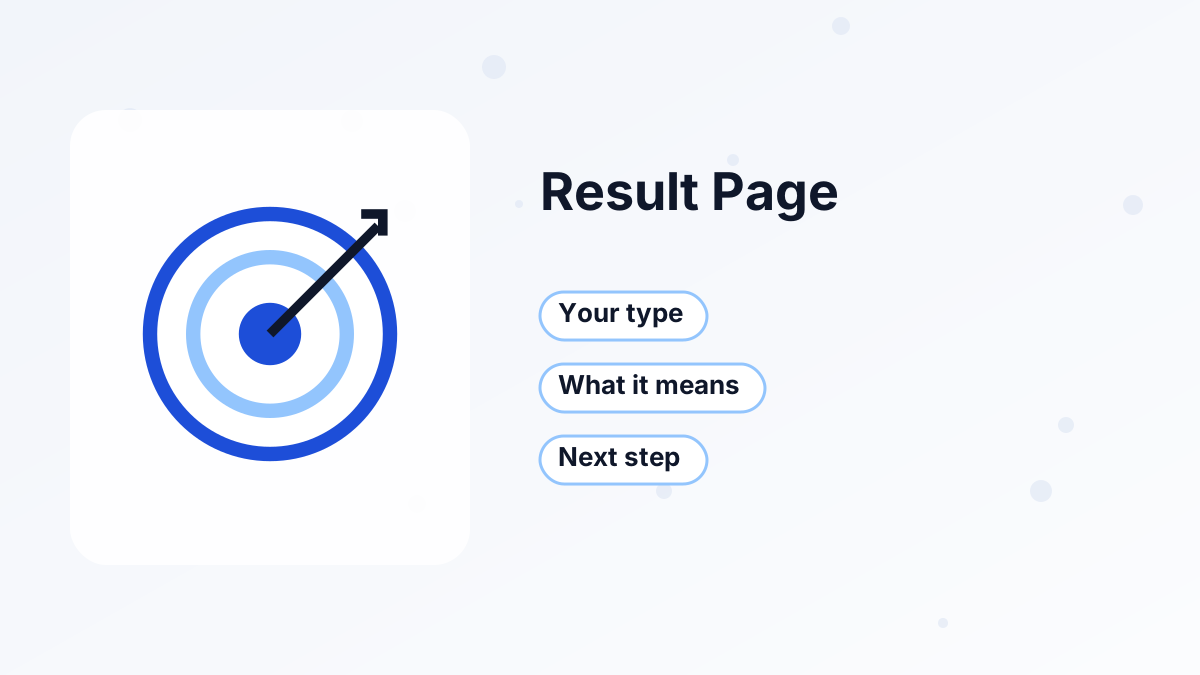
The result page is your moment of highest attention. People have invested time and want to know their answer, so make it worth reading.
A strong result page names the type, describes their situation in a way that feels accurate, explains what's holding them back and gives one practical recommendation. Then it offers a clear next step: a resource, a low-priced product, a workshop or a booking link.
Write each result positively. Even a "beginner" result should feel encouraging, focusing on what the person can do next rather than what they lack.
Following Up by Segment
The real advantage of a quiz funnel shows up in the emails. Because you know each lead's result, you can send a short sequence written specifically for them.
A beginner might receive emails about first steps and common mistakes, ending with an invitation to a starter product. An advanced lead might receive emails about scaling, ending with an invitation to apply for coaching. Both feel personal because they are.
Tags make this practical. Tag each lead by result when they submit the quiz, and start the matching email sequence automatically. See email list segmentation and email automation workflows.
Building a Quiz Funnel
You'll need a way to run the quiz, a landing page, result pages, email capture, tags and email sequences. Dedicated quiz tools offer advanced logic and design, and they connect to your email platform.
If you use systeme.io, you can run the quiz in a dedicated quiz tool and send each lead into systeme.io with a tag for their result, then let systeme.io handle result pages, segmented email sequences and offers. Alternatively, keep it simple with a short form where people choose the description that fits them best, which tags them directly in systeme.io. That lightweight version captures much of the benefit with less setup.
Quiz Funnel Mistakes to Avoid
Too many questions is the most common mistake; keep it short. Another is results that all say the same thing, which makes the quiz feel pointless. Make each result meaningfully different and useful.
Finally, don't forget the follow-up. A quiz that collects emails but sends the same generic newsletter to everyone wastes the most valuable part of the funnel. See welcome email sequence.
Segment Your Leads From Day One
Tag leads by result and send matching email sequences with systeme.io, starting free.
Try Systeme.io FreeQuiz Funnel FAQs
What is a quiz funnel?
A funnel that uses an interactive quiz to capture leads, then delivers personalized results, emails and offers based on their answers.
How many questions should a quiz have?
Five to ten short questions is usually enough to segment leads while keeping completion rates high.
Should you ask for an email before showing results?
Most quiz funnels do, because people are motivated to see their result. Explain what they'll receive to make the exchange clear.
How many result types should a quiz have?
Two to four results is easiest to manage, each linked to a specific next step or offer.
Can you build a quiz funnel with systeme.io?
You can connect a quiz tool to systeme.io with tags, or use a simple choice-based form that tags leads directly.