Welcome Email Sequence - What to Send, When to Send It and How to Lead to an Offer (2026)
What Is a Welcome Email Sequence?
A welcome email sequence is a short series of automated emails that every new subscriber receives after joining your list. It delivers what you promised, introduces who you are and gently leads readers toward a next step, such as a product, a call or a community.
It's the most important email series you'll write, because new subscribers are paying the most attention right after they join. They've just asked to hear from you. A thoughtful sequence makes that first impression count, and because it's automated, every subscriber gets the same considered experience.
Most welcome sequences run three to six emails over one to two weeks. Five emails is a practical starting point for most small businesses, long enough to build trust and short enough to write in an afternoon.
Deliver, help, connect, then invite
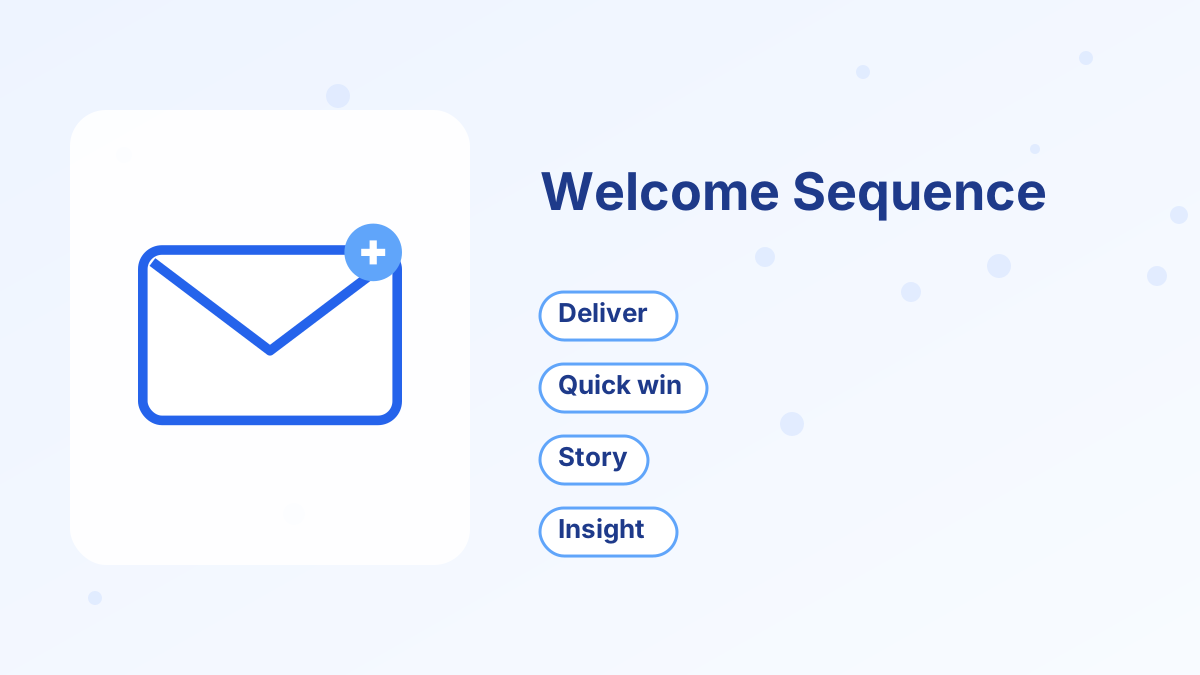
Email 1 delivers the freebie, Emails 2 to 4 share a quick win, your story and a key insight, and Email 5 invites readers to a clear next step.
The 5-Email Welcome Sequence
| Timing | Purpose | |
|---|---|---|
| Immediately | Deliver the freebie and set expectations |
| Day 1 or 2 | Help them get a small result |
| Day 3 or 4 | Build connection and credibility |
| Day 5 or 6 | Shift their thinking and build the case for your approach |
| Day 7 or 8 | Present the next step or offer |
You can adjust timing to your audience. Faster sequences suit simple, low-priced offers; slower ones suit considered purchases.
Email 1: Welcome and Delivery
Send this immediately. Subscribers are waiting for what they signed up for, so lead with it.
Confirm they're in, deliver the lead magnet with a clear link or button, and give one tip for getting the most from it. Then set expectations: what you'll send, how often and what's coming in the next few days. Invite them to reply with a question; replies also signal to inbox providers that your emails are welcome.
Subject line ideas: "Here's your checklist" or "Your template is inside."
Email 2: A Quick Win
The second email builds momentum by helping subscribers get a small, real result. Share one practical tip that builds on the freebie and can be used today.
For example, if your lead magnet is a meal planning template, Email 2 might share a 10-minute method for filling it in on Sunday evening. The goal is to make readers think, "This person actually helps."
Email 3: Your Story
Now that you've delivered value, tell readers who you are and why you do this work. Keep it relevant: focus on the part of your story that explains your approach and connects to their situation.
A good story email often follows a simple arc: where you or your clients started, what wasn't working, what changed and what it made possible. Avoid exaggerated claims; honest, specific details build more trust than big promises.
Email 4: A Key Insight or Common Mistake
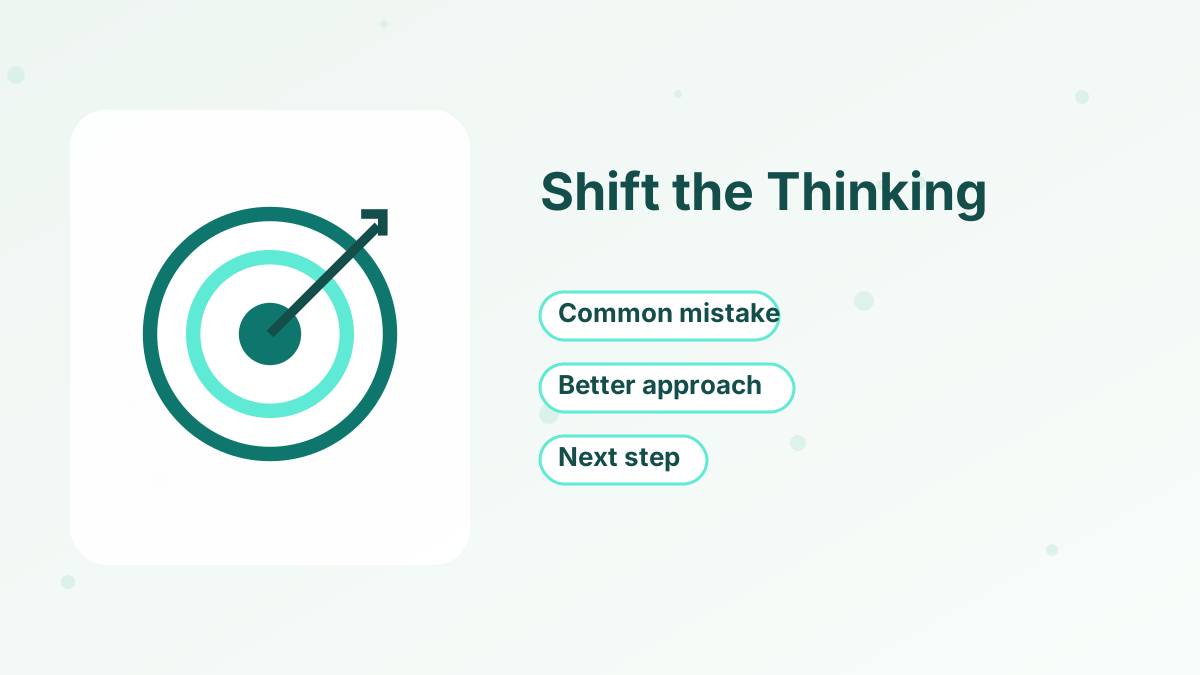
This email addresses a belief or mistake that keeps your readers stuck, and explains a better way. It quietly makes the case for the approach your offer uses.
For example, a business coach might write about why posting more often isn't the fix for slow sales, and why a clear offer and simple follow-up matter more. Readers who agree are primed for your next step.
Email 5: The Invitation
Finally, invite readers to take the next step. Depending on your business, that might be buying a course, booking a call, joining a paid community or trying a low-priced product.
Explain what the offer is, who it's for and how it builds on what they've learned. Make the call to action clear and specific. If there's a genuine reason to act now, such as a bonus for new subscribers that expires, say so honestly. See deadline funnel.
After this email, subscribers who don't buy simply move into your regular newsletter, where they keep receiving value and occasional reminders about your offer. Some will buy later, when the timing is right.
A Complete Welcome Sequence Example
Here's an illustrative five-email sequence for a fitness coach whose lead magnet is "The 15-Minute Home Workout Plan for Busy Parents."
| Subject line | What it says | |
|---|---|---|
| 1 | Your 15-minute workout plan is here | Delivers the plan, suggests starting tomorrow morning, invites a reply with their biggest obstacle |
| 2 | The 2-minute warm-up that makes it easier | Shares a short warm-up that helps beginners stick with the plan |
| 3 | Why I stopped recommending hour-long workouts | Explains the coach's approach and why short, consistent sessions work for busy parents |
| 4 | The mistake that makes most people quit in week 2 | Covers doing too much too soon and how to build a sustainable routine |
| 5 | Want a plan built around your week? | Invites readers to the 12-week coaching program, with what's included and how to apply |
Notice how each email builds on the last. Readers get value immediately, learn why the approach works and arrive at the invitation already understanding why coaching might help.
Writing Tips for Welcome Emails
Write to One Person
Use "you" and write as if replying to one reader's question.
Keep It Short
Most welcome emails work best in a few short paragraphs.
One Link per Email
A single clear call to action outperforms several competing links.
Be Consistent
Use the same sender name and a recognizable voice in every email.
Personalizing Your Welcome Sequence
If you offer more than one lead magnet, consider a slightly different welcome sequence for each. Someone who downloaded a beginner checklist needs different emails from someone who joined for an advanced workshop.
Tags make this easy. Tag subscribers by the freebie they chose, then start the matching sequence. You can also exit buyers from the sales emails as soon as they purchase, so they get onboarding instead of pitches. See email list segmentation.
Setting Up a Welcome Sequence
In most email platforms, you create an automated sequence, add your emails with delays between them and connect it to your signup form or tag.
In systeme.io, you build the sequence as an email campaign and connect it to an opt-in form or tag with an automation rule, so every new subscriber starts it automatically. The free plan includes 1 campaign and 1 automation rule, which is exactly enough for a lead magnet delivery and welcome sequence, with unlimited email sends. See systeme.io email marketing and systeme.io automation rules.
Common Welcome Sequence Mistakes
The most common mistake is not having one at all, so new subscribers get the freebie and then silence until the next newsletter, by which time they've forgotten you. Another is pitching too hard too early, before you've delivered any value.
Others include long emails that bury the main point, several competing links in each email, and a sequence that never mentions an offer at all. A welcome sequence should be generous, but it should also lead somewhere.
Measuring and Improving Your Sequence
Look at each email's click rate and replies, and the sales or bookings that come from Email 5. If clicks drop sharply at one email, rewrite it. If few people take the final step, strengthen the bridge in Emails 3 and 4 or make the invitation clearer.
Review your sequence every few months. Add your best-performing newsletter content to it, and remove emails that don't earn their place.
Automate Your Welcome Sequence Free
Opt-in forms, email campaigns and automation rules on systeme.io's free plan.
Try Systeme.io FreeWelcome Email Sequence FAQs
How many emails should a welcome sequence have?
Most run three to six emails over one to two weeks. Five is a practical starting point.
When should the first welcome email be sent?
Immediately after sign-up, so subscribers receive what they signed up for while they're paying attention.
Should you sell in a welcome sequence?
Yes, gently and after delivering value. The final email can invite readers to a relevant offer.
What should the first welcome email include?
The promised freebie, one tip for using it, what to expect next and an invitation to reply.
Can you automate a welcome sequence for free?
Yes. Systeme.io's free plan includes an email campaign and an automation rule with unlimited sends.