How to Create an Online Course - From Idea to First Students, Step by Step (2026)
Before You Start: What Makes a Course Sell
An online course is a structured set of lessons that helps students get a specific result. The courses that sell well aren't necessarily the longest or the most polished. They're the ones that promise a clear outcome to a specific group of people and deliver it efficiently.
That's good news if you're starting out. You don't need a studio, a huge audience or months of filming. You need a topic people will pay to learn, a sensible structure, decent audio and a way to deliver lessons and take payment.
In this guide, we'll walk through nine practical steps, from choosing a topic to enrolling your first students, with the decisions that matter most at each stage.
Validate first, build lean, sell while you build
Pick a specific result for a specific person, test demand before recording, outline backward from the outcome, record short lessons, then host and sell the course with funnels and email.
Step 1: Choose a Course Topic People Will Pay For
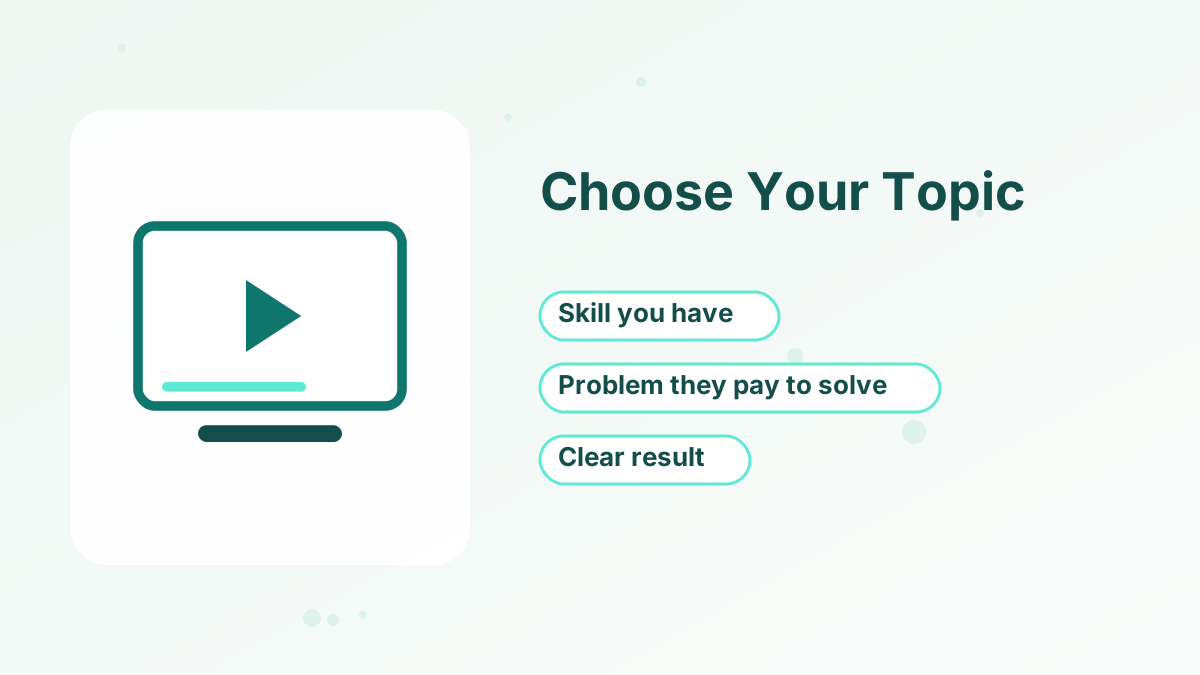
The best course topics sit where three things overlap: something you know well, a problem people actively want solved and a result they'll pay to reach faster.
Start by listing what people already ask you for help with, at work, online or among friends. Questions from friends, clients, colleagues and followers are strong signals, because they show real demand. Then narrow the topic to a specific outcome. "Photography" is too broad; "Shoot Professional-Looking Product Photos With Your Phone" is a course people can picture buying.
| Broad topic | Course-ready topic |
|---|---|
| Fitness | A 6-week strength plan for busy parents with no gym |
| Marketing | Get your first 10 clients as a freelance designer |
| Cooking | Weeknight meal prep for families in 90 minutes a week |
| Excel | Build a monthly business dashboard in Excel |
What it means for you: a specific topic is easier to create, easier to market and easier for buyers to say yes to.
Step 2: Validate Demand Before You Build
The biggest risk in course creation is spending months building something nobody buys. Validate first.
- Talk to potential studentsAsk a handful of people in your audience what they're struggling with and what they've tried.
- Check what already sellsExisting courses, books and paid communities on your topic show that people spend money here.
- Offer a free tasteRun a free workshop or mini-course and see who shows up and what they ask.
- Pre-sellOffer early access at a founding price before the course is finished; even a few buyers confirm demand.
Pre-selling is the strongest validation. If people pay before the course exists, you know the topic works, and their questions help you shape the content. See lead magnet ideas for free offers that test interest.
Step 3: Define the Outcome and Outline Backward
Write one sentence describing what students will be able to do by the end: "By the end of this course, you'll be able to plan, shoot and edit product photos that look professional, using only your phone."
Then work backward, step by step. List the steps someone needs to take to reach that outcome, group them into modules and break each module into short lessons. Remove anything that doesn't move students toward the outcome, even if it's interesting. Save it for a bonus or a future course.
| Module | Lessons |
|---|---|
| Phone settings, simple lighting, choosing a background |
| Composition basics, angles that sell, shooting a product set |
| Free editing apps, consistent color, exporting for online stores |
| Creating a product photo checklist, your first full shoot |
Step 4: Choose Your Course Format
Most online courses combine several formats. Pick the ones that suit your topic and your strengths.
Video Lessons
The most common format; ideal for showing and demonstrating.
Screen Recordings
Perfect for software, digital tools and step-by-step tutorials.
Written Lessons
Fast to create and easy to update; great for reference material.
Worksheets and Templates
Help students apply what they learn.
Quizzes
Reinforce key ideas and show progress.
Live Sessions
Add accountability and a chance to answer questions.
Shorter lessons usually work better than long ones. A lesson that teaches one idea in a few minutes is easier to finish, easier to revisit and easier to update.
How Long Should Your Course Be?
Long enough to deliver the outcome, and no longer. Many successful first courses contain a few hours of focused lessons, split into short videos with worksheets. Buyers rarely complain that a course got them to a result too efficiently, but they often abandon courses that feel padded.
If you find yourself with far more material than the outcome needs, consider splitting it into two courses: a core course and an advanced follow-up. That gives you a natural next offer for students who finish the first.
Creating Course Resources
Resources help students apply what they learn. Simple worksheets, checklists and templates often add more value than extra videos, because they turn lessons into action. Create one resource per module that helps students complete that module's main task, and name it clearly so students can find it later.
Step 5: Record Your Lessons Simply
You don't need expensive equipment to start. Prioritize clear audio, because viewers tolerate average video far better than poor sound. A simple microphone, a quiet room and natural light from a window go a long way.
Write a short outline for each lesson rather than a full script, so you sound natural. Batch-record several lessons in one session to keep your setup and energy consistent. Record in short takes, and don't aim for perfection; aim for clarity. You can improve production quality in later versions once students are enrolled and giving feedback.
What it means for you: a "good enough" course that launches beats a perfect course that never ships.
Step 6: Choose a Course Platform
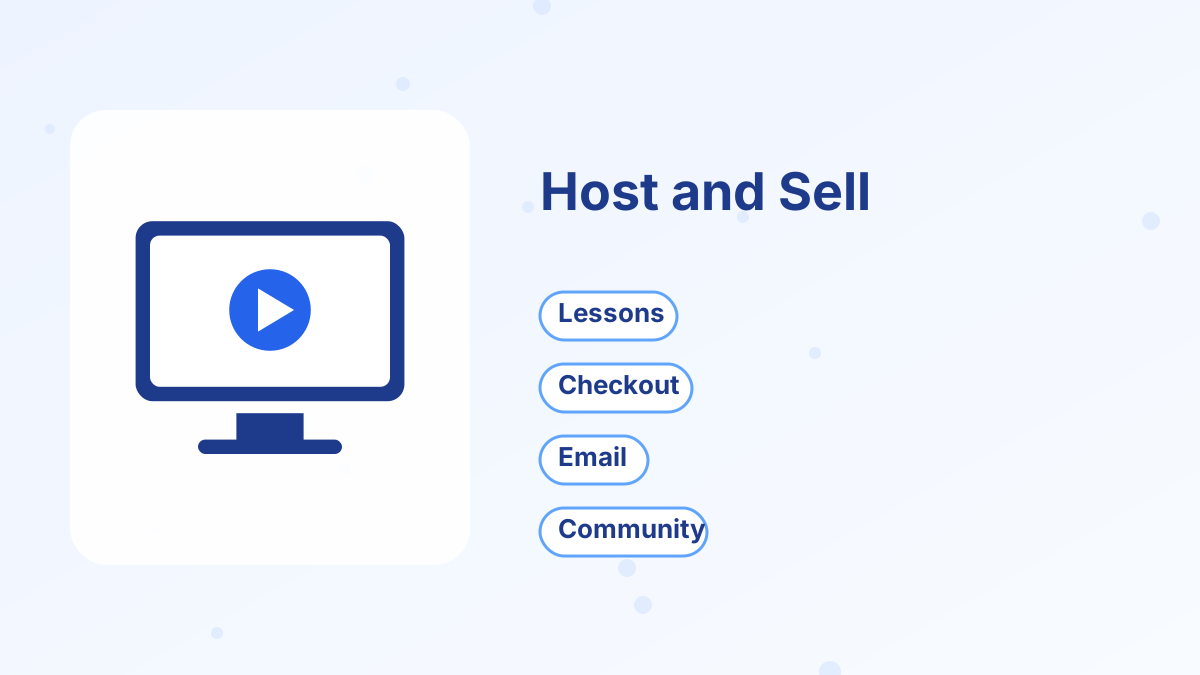
You need somewhere to host lessons, control access and take payment. There are two main approaches.
Dedicated course platforms such as Thinkific and Teachable focus on the learning experience, and many creators pair them with separate email and funnel tools. All-in-one platforms such as systeme.io and Kajabi include course hosting alongside sales pages, checkout and email.
Systeme.io's course builder includes modules and lessons, video uploads, drip content, quizzes, bundles and automatic enrollment after payment, with unlimited file storage. The free plan includes 1 course, with 0% transaction fees on every plan. See systeme.io courses and the best online course platforms.
Step 7: Set Your Price
Price based on the value of the outcome, not the number of hours of video. A course that helps someone land better clients or save hours every week is worth more than its runtime suggests.
Look at what similar courses charge, consider your audience's budget and the depth of support you include, and remember that you can test prices over time. Payment plans can make higher prices accessible. See how to price an online course.
Step 8: Build Your Sales Funnel
A course needs a way to find students. A simple funnel works for most creators: a free lead magnet related to the course, an email welcome sequence that builds trust and a sales page with checkout.
- Lead magnetA free checklist, mini-lesson or workshop on part of the course topic.
- Welcome emailsFive or so emails that help, share your approach and invite readers to the course.
- Sales pageClear outcome, what's included, who it's for, proof, price, guarantee and FAQ.
- CheckoutSimple, with an order bump such as a workbook or templates.
- OnboardingAutomatic enrollment and emails that help students start.
See how to build a sales funnel and how to write a sales page.
Step 9: Launch, Learn and Improve
Launch to your list with a clear enrollment window or an evergreen funnel. Then watch how students move through the course: where they get stuck, which lessons they rewatch and what questions they ask.
Use that feedback to improve. A simple survey at the end of each module, asking what was most useful and what was unclear, gives you specific guidance without much effort. Add a lesson where many students struggle, shorten lessons that lose attention and collect genuine testimonials from students who get results. Your second version will be better than your first, and your students will help you get there. See how to launch an online course.
Common Course Creation Mistakes
The most common mistake is building too much before validating. Another is a topic that's too broad, which makes the course long and the marketing vague. A third is ignoring marketing until the course is finished; start building your email list while you create.
A fourth is waiting for perfect equipment or production before publishing anything. Students care far more about clear teaching and a useful result than about studio-quality video.
Finally, don't overload students. More content isn't more value. A focused course that gets students to a result is what earns referrals and repeat buyers.
Create and Sell Your Course Free
Course hosting, sales funnel, email and checkout on systeme.io's free plan.
Try Systeme.io FreeHow to Create an Online Course FAQs
How do you create an online course?
Choose a specific topic, validate demand, outline backward from the outcome, record short lessons, host them on a course platform and sell with a funnel.
How long does it take to create an online course?
A focused first course can take a few weeks. Pre-selling and building in stages helps you launch sooner.
Do you need expensive equipment?
No. Clear audio matters most. A simple microphone, a quiet room and natural light are enough to start.
How long should an online course be?
As long as it takes to deliver the promised result. Short, focused courses often sell and complete better than long ones.
Can you create and sell a course for free?
Yes. Systeme.io's free plan includes 1 course, sales funnels, email and checkout with 0% transaction fees.