How to Start Affiliate Marketing - Niche, Programs, Content, Funnels and Your First Commission (2026)
How Affiliate Marketing Works
Affiliate marketing means recommending another company's product and earning a commission when someone buys through your unique tracking link. The company handles the product, payment and support. You handle the recommendation and the traffic.
It's popular because you don't need to create a product, hold inventory or provide customer service. But it isn't effortless. Your income depends on helping the right people make good buying decisions, consistently, over months.
What it means for you: think of affiliate marketing as a content and trust business. The links are the easy part. The value you add before someone clicks is what earns commissions.
Pick a niche, join fitting programs, create helpful content and build an email list
Choose a niche you can create content about, join affiliate programs that genuinely fit your audience, publish helpful reviews and guides on one main channel, capture emails with a bridge page funnel and always disclose your links.
Step 1: Choose Your Niche
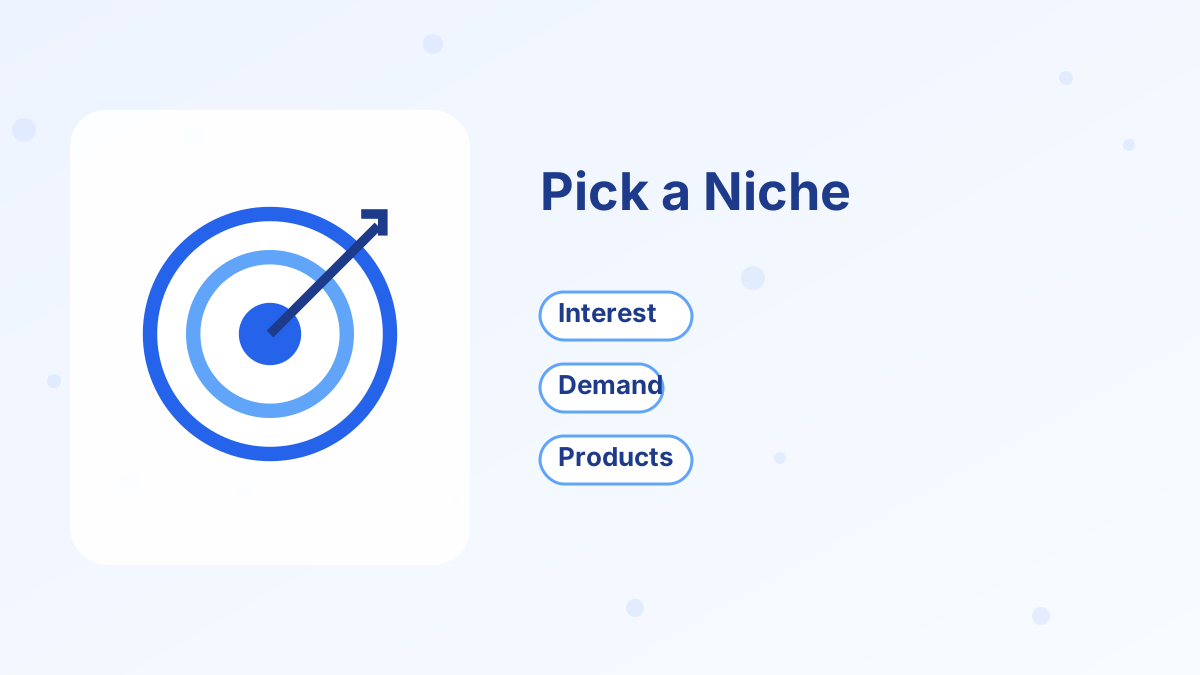
Your niche should sit where three things overlap: a topic you can create content about for a long time, an audience actively looking for solutions and products with affiliate programs that pay reasonably.
| Question | Why it matters |
|---|---|
| Can you write or film 50 pieces of content on this topic? | Affiliate income grows with consistent content |
| Do people search for reviews, comparisons and how-tos? | Buying-intent content drives commissions |
| Are there products with affiliate programs? | No programs means nothing to promote |
| Do products have recurring or meaningful commissions? | Small commissions need huge volume |
| Is the audience reachable on a channel you enjoy? | You'll stay consistent if you like the channel |
Software and digital tools are popular niches because many programs pay recurring commissions for as long as the customer stays subscribed.
Step 2: Find Affiliate Programs
Search for "[product or niche] affiliate program", check the footers of tools your audience uses and browse affiliate networks that group many programs together.
Compare programs on what matters: commission rate, whether commissions are one-time or recurring, cookie duration, payout methods and thresholds, and the rules about where and how you can promote. Some programs don't allow paid ads on brand terms or links in emails, so read the terms before you start.
Systeme.io's affiliate program is a useful example of what beginners look for: it pays 60% lifetime recurring commissions, doesn't require an application and is open to non-customers. It also gives you a dashboard to track clicks and earnings. See systeme.io affiliate program.
Step 3: Choose Your Main Channel
You can promote affiliate products through a website, YouTube, social media, a newsletter or a podcast. Pick one main channel at first and get good at it.
| Channel | Strengths | Challenges |
|---|---|---|
| Blog or website | Search traffic for buying-intent keywords; content compounds over time | Slow to rank; needs consistent publishing |
| YouTube | Video reviews and tutorials build trust; videos keep getting views | Production time; algorithm changes |
| Email newsletter | Direct access to your audience; strong conversions | Needs a list first; check program rules |
| Social media | Fast reach; easy to start | Short content life; harder to drive sales |
| Podcast | Deep trust with loyal listeners | Harder to track clicks |
Whatever you choose, connect it to an email list so you're not fully dependent on any platform. See affiliate marketing without a website.
Step 4: Create Content That Helps People Decide
Affiliate content works best when it answers the questions people ask right before buying.
Product Reviews
Explain what a product does, who it suits, its limitations and its pricing.
Comparisons
Help readers choose between two or three options for their situation.
Best-Of Lists
Recommend options for different needs and budgets.
Tutorials
Show how to complete a task with the product, which demonstrates value.
Alternatives
Help people who are unhappy with one product find a better fit.
Problem-Solving Guides
Explain how to solve a problem, then recommend tools that help.
Be honest about who a product isn't right for. Readers trust recommendations that include limitations, and that trust is what makes them click your links.
Step 5: Build a Bridge Page Funnel
Sending people straight to a merchant's page from social posts or ads often converts poorly, because they arrive cold. A bridge page sits in between: it explains why you recommend the product, captures an email and then passes the visitor on.
With an email list, you can follow up with tutorials, case studies and reminders, giving people several chances to buy and letting you recommend other relevant products later. See affiliate bridge page.
Systeme.io is well suited to this: you can build an opt-in page and bridge page in a funnel, send follow-up emails and even host a blog, all on the free plan. See systeme.io for affiliate marketing.
Step 6: Disclose Your Affiliate Links
Always tell your audience when you may earn a commission. In the United States, the FTC requires clear disclosure of affiliate relationships, and many other countries have similar rules. Many affiliate programs require it in their terms too.
Put the disclosure where people will see it before they click, in plain language. Disclosure builds trust rather than reducing it: readers appreciate honesty.
Step 7: Track and Improve
Use your affiliate dashboards and link tracking to see which content and links get clicks and sales. Double down on what works: update top-performing reviews, create related content and improve pages that get traffic but few clicks.
- Track clicks per pageFind which content sends the most visitors to merchants.
- Track conversions per programSee which products your audience actually buys.
- Update winnersRefresh pricing, screenshots and details on your best content.
- Fill gapsCreate comparisons and tutorials around products that convert well.
Understanding Commission Types
Not all commissions are equal. Before choosing what to promote, understand how each program pays, because the structure changes how much each referral is worth over time.
| Type | How it pays | Typical products | What it means for you |
|---|---|---|---|
| One-time percentage | A share of a single sale | Physical products, ebooks, one-off courses | Need steady new sales to keep earning |
| Flat fee per sale | A fixed amount per purchase | Courses, services, some software | Easy to forecast per referral |
| Recurring | A share of every subscription payment | Software, memberships | Each referral can keep paying for months or years |
| Per lead | A fee for a sign-up or trial | Finance, insurance, free trials | Paid without a purchase, but often lower amounts |
| Tiered | Higher rates as you refer more | Many software programs | Rewards growth over time |
A quick illustration with made-up numbers: a one-time $30 commission pays $30 once. A 40% recurring commission on a $30 monthly subscription pays $12 every month the customer stays, which passes $30 after three months. For content that keeps sending referrals, recurring programs can add up to much more over time.
Your First 90 Days
A simple plan keeps you focused while you learn what works.
- Weeks 1-2: FoundationsChoose a niche, join two or three programs and set up your channel and a simple opt-in funnel.
- Weeks 3-6: Core contentPublish reviews, comparisons and tutorials for your main products.
- Weeks 7-10: EmailWrite a welcome sequence that helps subscribers and recommends products naturally.
- Weeks 11-13: ReviewCheck which content gets clicks, update it and plan the next batch around what works.
Consistency matters more than volume. A steady rhythm of useful content over three months teaches you far more than a burst of rushed posts.
How Long Until You Earn?
Affiliate marketing usually takes time. Search-based content can take months to rank, and audiences take time to build trust. Many beginners earn little in the first few months, then see growth as content accumulates and their list grows.
Recurring commission programs help here, because each customer you refer can keep paying you for months or years. That's why many affiliates focus on software and subscription products.
Common Affiliate Marketing Mistakes
Common mistakes include promoting too many unrelated products, choosing programs only for high commissions, writing thin reviews without real detail, sending cold traffic directly to merchant pages, skipping disclosure, ignoring program rules and quitting before content has time to work.
Build Your Affiliate Funnel Free
Bridge pages, email follow-up and a blog on systeme.io, plus a 60% recurring affiliate program.
Try Systeme.io FreeHow to Start Affiliate Marketing FAQs
How do you start affiliate marketing with no experience?
Choose a niche, join a few relevant programs, pick one channel, publish helpful reviews and tutorials and build an email list.
Do you need a website for affiliate marketing?
No, but it helps. You can use YouTube, social media or email, ideally with a bridge page to capture leads.
How much do affiliate marketers earn?
It varies hugely. Income depends on niche, traffic, trust, commission rates and time invested.
What are good affiliate programs for beginners?
Programs that fit your audience, with clear terms, reliable tracking and ideally recurring commissions, such as systeme.io's 60% lifetime program.
Do you need to disclose affiliate links?
Yes. In the US, the FTC requires clear disclosure, and many programs and countries have similar requirements.