How to Promote Affiliate Links - Content, Email, Video, Social and Funnels Without Spamming (2026)
Promoting Affiliate Links the Right Way
Promoting affiliate links isn't about posting them everywhere. It's about placing them where people are already looking for a solution, inside content that helps them decide. The more useful the context, the more likely people are to click and buy.
The methods below cover content, email, video, social media, communities and funnels. You don't need all of them. Pick two or three that suit your audience and strengths, and do them well.
What it means for you: every link should answer the question "why would this person want this right now?" If you can't answer it, the link probably doesn't belong there.
Put links inside helpful content and follow up by email
Write reviews, comparisons and tutorials, add links where readers make decisions, capture emails with a bridge page and recommend products in follow-up emails where the program allows it. Always disclose.
1. Write In-Depth Reviews
Reviews attract people who are already considering a product. Explain what it does, who it suits, its pricing, limitations and alternatives. Place links near pricing details, in a summary box near the top and at the end.
Honest reviews that include drawbacks convert better over time, because readers trust them.
2. Publish Comparisons
Comparison content ("X vs Y") reaches people choosing between options. Use a clear table and recommend the right choice for different situations. Each recommendation becomes a natural place for a link.
3. Create Tutorials
Tutorials show people how to complete a task with a product, which demonstrates its value. "How to build a sales funnel in [tool]" helps readers and sends them to sign up when they're ready to follow along.
4. Build Best-Of Lists
Best-of lists help readers compare several options for a need. Give each product a clear "best for" label and explain your reasoning.
5. Send Recommendations by Email
Email is often the highest-converting place to recommend products, because subscribers already trust you. Share tutorials, case studies and timely reminders, and recommend products when they genuinely fit what you're teaching.
Check program terms first. Some programs don't allow links in emails; in that case, link to your own review or bridge page. See email marketing for beginners.
6. Use a Bridge Page Funnel
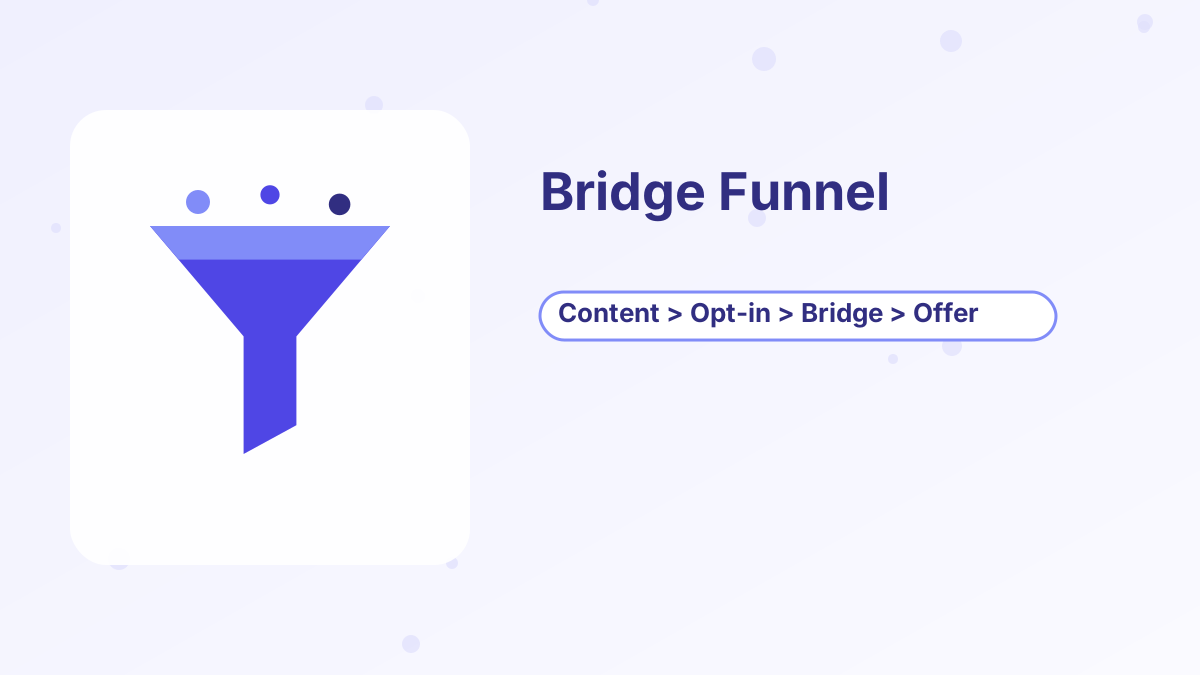
Instead of sending social or ad traffic straight to the merchant, send it to a bridge page that explains your recommendation and captures emails. Then follow up with helpful emails. See affiliate bridge page.
Systeme.io lets you build the opt-in page, bridge page and email follow-up on the free plan, so you can promote affiliate links with a funnel from day one.
7. Make YouTube Videos
Video reviews and tutorials build trust because viewers see the product in action. Add links in the description with a clear disclosure and mention them verbally. Pin a comment with the link if the platform allows it.
8. Share on Social Media
Short posts and videos can drive clicks when they show a quick win or tip. Use your bio link to point to a page that lists your recommendations or to a bridge page. Follow each platform's rules on links and disclosure.
9. Help in Communities
Answer questions in forums and groups where the product genuinely solves the problem. Only share links where the rules allow it, and focus on being helpful first. Many communities ban affiliate links, and spamming them damages your reputation.
10. Add Links to Your Own Products
If you sell courses, ebooks or templates, recommend tools inside them. Students following a tutorial are likely to sign up for the tools you use. Resource pages listing your recommended tools work well too.
11. Create a Resources Page
A "recommended tools" page on your site or funnel collects your top recommendations in one place, with short explanations. Link to it from your bio, emails and content.
12. Use Paid Ads Carefully
Paid ads can bring traffic quickly, but they cost money and many affiliate programs restrict them, especially bidding on brand names. Send ads to a bridge page, not directly to the merchant, and only after checking the program's rules.
Where to Place Links on a Page
| Placement | Why it works |
|---|---|
| Summary or verdict box near the top | Ready buyers can act immediately |
| Next to pricing details | Readers checking price are close to deciding |
| Inside comparison tables | Choices lead naturally to a link |
| After a tutorial step | Readers want to follow along |
| In the conclusion | Readers who finish are often convinced |
| Buttons with clear labels | Specific buttons get more clicks than plain text |
Use clear, specific labels such as "See current pricing" or "Try it free" rather than vague phrases. Don't overload pages with links; a few well-placed links work better than dozens.
Rules and Best Practices
- Disclose clearlySay you may earn a commission, close to the links. In the US, the FTC requires clear disclosure.
- Read program termsCheck rules on email, ads, coupons and social media.
- Recommend what fitsOnly promote products that genuinely suit your audience.
- Keep content currentUpdate prices and features so readers trust your information.
- Track resultsMeasure clicks and sales per page and channel, then improve.
Choosing Programs Worth Promoting
Promotion is easier when the product is genuinely good and the program rewards you fairly. Recurring commission programs are especially valuable because each referral can keep paying you.
Systeme.io's affiliate program pays 60% lifetime recurring commissions, doesn't require an application and is open to non-customers. Because systeme.io has a free plan, it's also an easy recommendation for beginners who want to test it before paying. See systeme.io affiliate program.
Writing Link Text That Gets Clicks
The words around your link matter as much as where it sits. Specific link text tells readers exactly what happens when they click, which builds confidence and improves click-through.
| Weak | Stronger |
|---|---|
| Click here | See the current pricing plans |
| Check it out | Start the free plan |
| This tool | The funnel builder we recommend for beginners |
| Buy now | Compare plans and features |
Keep labels honest and accurate. If a product has a free plan, say so; if it doesn't, don't imply it. Readers who feel misled by a button rarely trust the next one.
Matching Methods to Your Audience
Different audiences respond to different promotion methods. Choosing the right mix is often more important than doing more.
| Audience stage | What they need | Best methods |
|---|---|---|
| Just discovering the problem | Education and context | Tutorials, social tips, podcasts |
| Researching solutions | Options and comparisons | Best-of lists, comparisons, YouTube reviews |
| Ready to choose | Confidence and specifics | In-depth reviews, pricing guides, bridge pages |
| Already a customer | Help getting results | Tutorials, email tips, resource pages |
What it means for you: put your strongest links in content for people who are ready to choose, and use earlier-stage content to bring people into your email list. That way, every piece of content has a job, and readers meet your recommendations when they're most useful.
Common Mistakes When Promoting Affiliate Links
Common mistakes include posting links without context, spamming communities, promoting too many unrelated products, hiding disclosures, ignoring program terms, sending cold ad traffic straight to merchants and never updating old content.
Promote Smarter With a Funnel
Bridge pages and email follow-up on systeme.io, plus a 60% recurring affiliate program.
Try Systeme.io FreeHow to Promote Affiliate Links FAQs
What is the best way to promote affiliate links?
Inside helpful content such as reviews, comparisons and tutorials, supported by an email list and a bridge page.
Can you promote affiliate links on social media?
Yes, with clear disclosure and within each platform's rules. Linking to a bridge page often works better than direct links.
Can you put affiliate links in emails?
It depends on the program's terms. Some allow it and others don't.
How do you promote affiliate links without spamming?
Share links only where they genuinely help, follow community rules and focus on value first.
How many affiliate links should a page have?
Enough to be convenient at key decision points, such as near the top, by pricing and at the end, without cluttering the page.