Affiliate Marketing Without a Website - Channels, Funnels and Rules That Still Work (2026)
Can You Do Affiliate Marketing Without a Website?
Yes. You can earn affiliate commissions by promoting products on YouTube, social media, email newsletters, podcasts and online communities, without ever building a traditional blog. What matters is sending genuinely interested people to the offer through your tracking link.
There are trade-offs. Without a website, you depend more on platforms you don't control, it's harder to earn search traffic and some affiliate programs ask for a website or a defined promotional method when you apply. Many affiliates solve this with a simple funnel page instead of a full site.
What it means for you: you can start today with the channel you already use, then add a lightweight landing page and email list so your business isn't tied to one platform.
Use one content channel plus a simple funnel page and email list
Create helpful content on YouTube, social media or a newsletter, send viewers to a bridge page that captures emails and follow up by email. Always disclose links and check each program's rules.
1. YouTube Videos
YouTube is one of the strongest channels for affiliate marketing without a website. People search YouTube for reviews and tutorials just as they search Google, and videos can keep attracting views for years.
Create tutorials, reviews, comparisons and "how I would set up" walkthroughs. Put your affiliate links in the description with a clear disclosure, and mention them naturally in the video. Pointing viewers to a free resource on a bridge page lets you follow up by email.
2. Short-Form Social Media
Short videos and posts can reach new people quickly. Share quick tips, mistakes to avoid and results-focused demonstrations, then direct people to the link in your bio.
Social content has a short life, so consistency matters. Each platform has its own rules on links and disclosures, so follow them carefully.
3. Email Newsletters
Email is often the highest-converting channel for affiliates, because subscribers chose to hear from you and see your recommendations directly. A newsletter in a specific niche lets you share tutorials, tool recommendations and deals over time.
Check each program's terms first, since some don't allow affiliate links in emails. Where they're not allowed, link to your own page that explains the product instead. See how to start a newsletter.
4. Online Communities and Groups
Facebook groups, forums and niche communities are full of people asking for recommendations. Answer questions genuinely and share links only where community rules allow it and the product truly fits the question.
Building a reputation as a helpful member works far better than dropping links. Many communities ban affiliate links outright, so read the rules before posting.
5. Podcasts
Podcasts build deep trust because listeners spend a lot of time with you. Mention products in context, offer a memorable link or code and list links in the show notes.
Tracking is harder with audio, so a simple redirect link or a dedicated landing page helps you measure results.
6. Paid Advertising to a Landing Page
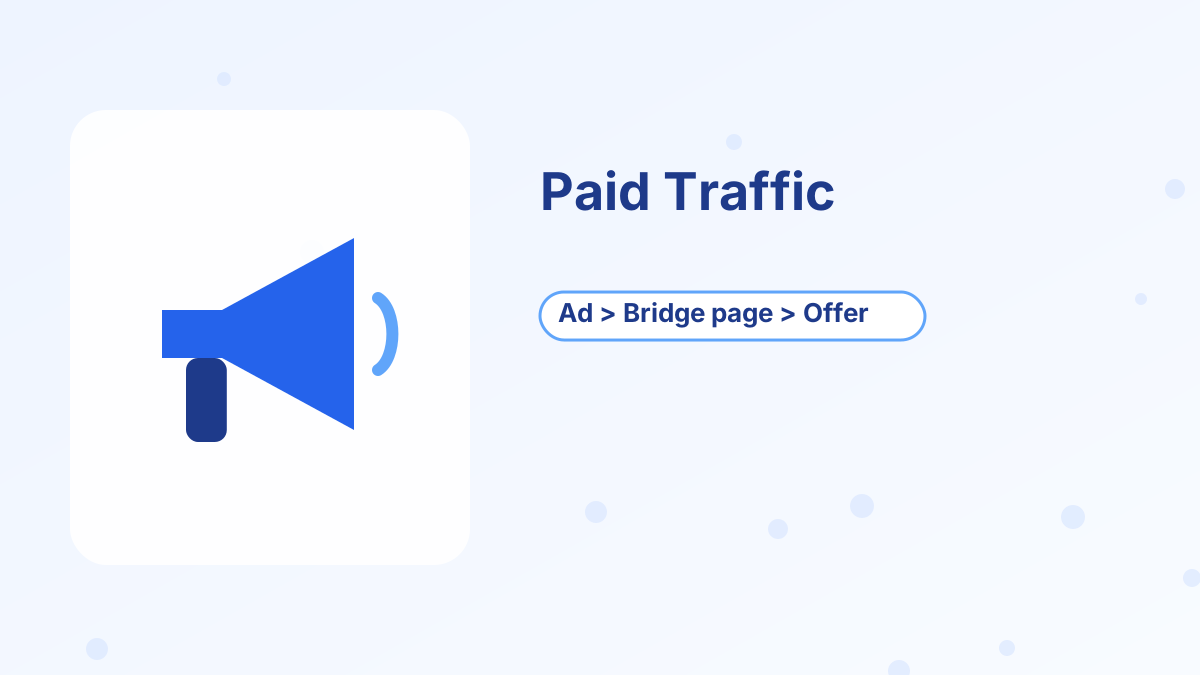
Some affiliates run ads to a landing page rather than to the merchant directly. This can scale quickly, but it costs money and needs careful testing. Many programs restrict paid ads, especially bidding on brand names, so check the terms.
Never send paid traffic straight to an affiliate link if the ad platform or program forbids it. A bridge page that adds real value is usually required and converts better anyway.
7. Funnel Pages Instead of a Full Website
A single funnel page is the middle ground between no website and a full blog. It's a simple page that explains why you recommend the product, offers a free bonus or resource and captures an email before sending people to the offer.
| Factor | Full website or blog | Funnel page |
|---|---|---|
| Setup time | Weeks to build content | Hours |
| Search traffic | Strong over time | Minimal |
| Email capture | Possible | Built in |
| Cost | Hosting and tools | Free plans available |
| Best for | Long-term content businesses | Social, video and ad traffic |
Systeme.io lets you build opt-in and bridge pages, collect emails and send follow-up sequences on its free plan, and add a blog later if you want search traffic. See affiliate bridge page.
Rules to Follow Without a Website
- Disclose clearlyTell people you may earn a commission, close to the link. In the US, the FTC requires clear disclosure.
- Read each program's termsCheck whether email, ads, social posts and coupon sites are allowed.
- Follow platform rulesSocial networks and communities have their own link and promotion policies.
- Avoid spamDon't post links in unrelated conversations or send unsolicited messages.
- Be honestRecommend products that fit the person's need, and mention limitations.
Choosing Your First Channel
The best channel is the one where your audience already spends time and where you can create content consistently. Use this quick guide to decide.
| If you enjoy | Start with | First content to create |
|---|---|---|
| Talking on camera and demonstrating | YouTube | Tutorials and honest reviews |
| Quick tips and trends | Short-form social | Quick wins and before-and-after demos |
| Writing | Email newsletter | Weekly tips with a recommended tool |
| Conversations and interviews | Podcast | Episodes on problems the product solves |
| Helping others one-to-one | Communities | Thorough answers to common questions |
Whichever you pick, give it a few months of steady effort before judging results, and connect it to a funnel page so you collect emails from day one.
Pros and Cons of Skipping a Website
Pros
- Start immediately on a channel you already use
- Lower startup costs
- Fast feedback on what your audience wants
Cons
- Dependent on platform algorithms and rules
- Little or no search traffic
- Some programs prefer or require a website when you apply
Building Toward Ownership
Even if you start without a website, aim to own your audience. An email list is the simplest step: it moves followers from rented platforms to a channel you control. A funnel page captures those emails, and an email sequence keeps recommending relevant products over time.
Later, you can add a blog or a small content site to earn search traffic alongside your social channel.
Capture Emails Without a Website
Bridge pages, email sequences and a blog option on systeme.io, starting free.
Try Systeme.io FreeAffiliate Marketing Without a Website FAQs
Can you do affiliate marketing without a website?
Yes. YouTube, social media, email, podcasts and communities all work, ideally with a funnel page to capture emails.
What is the best platform for affiliate marketing without a website?
YouTube is often strongest because videos are searchable and long-lasting, but the best platform is the one where your audience spends time.
Do affiliate programs accept people without a website?
Many do, but some ask for a website or details of how you'll promote. Check each program's application requirements.
Can you put affiliate links in emails?
It depends on the program. Some allow it and others don't, so read the terms.
Do you need to disclose affiliate links on social media?
Yes. Clear disclosure is required in the US and many other countries, and most programs require it too.