What Is a Sales Funnel - How Strangers Become Customers, Step by Step (2026)
What Is a Sales Funnel?
A sales funnel is the path a person takes from first hearing about you to becoming a customer. It's called a funnel because many people enter at the top and fewer move through each step, so the shape narrows as it goes down.
Online, a sales funnel is usually a planned sequence of pages and emails. A visitor lands on an opt-in page, trades their email for something useful, receives a series of emails that build trust, and then sees an offer they can buy. Each step has one job: move the right people to the next step.
Here's why that matters to you. Without a funnel, your marketing is a set of disconnected posts, pages and emails, and you can't tell where buyers are getting lost. With a funnel, every step is designed, measurable and improvable.
A sales funnel is a planned path from stranger to customer
It captures attention, collects contact details, builds trust with follow-up and presents an offer at the right moment, so more of the right people buy.
How a Sales Funnel Works
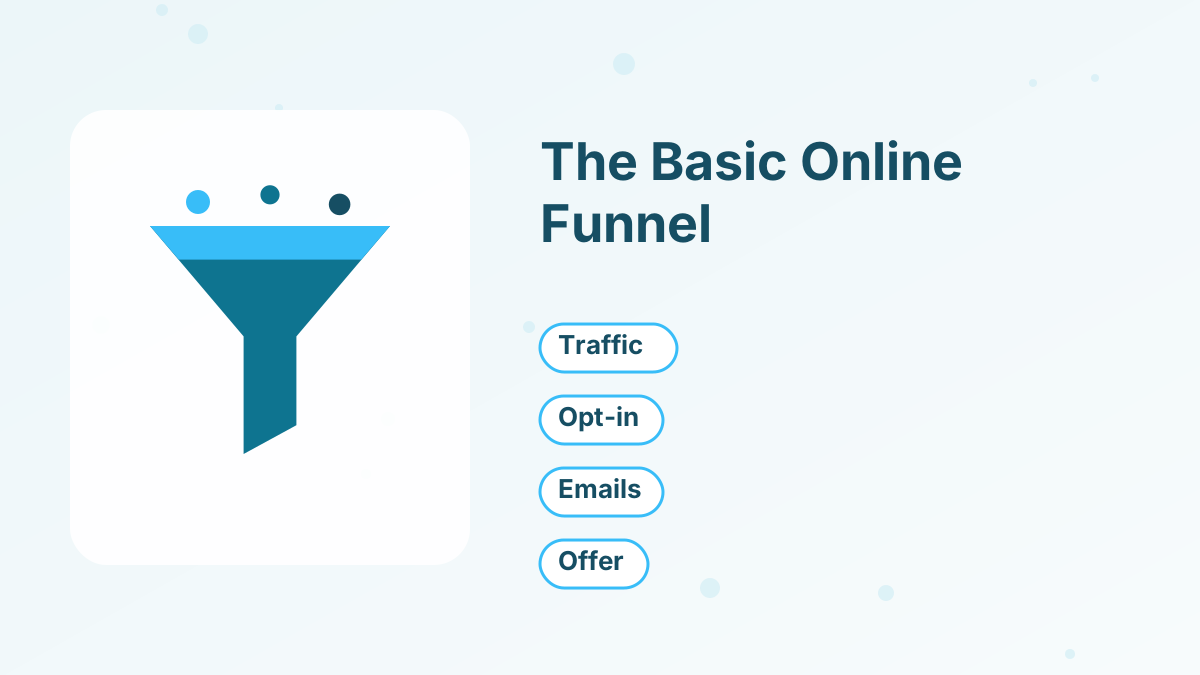
Most online funnels follow the same simple pattern, whatever you sell.
- Traffic arrivesPeople find you through social media, search, a podcast, a partner or an ad.
- They opt inA landing page offers something useful, such as a checklist, mini-course or webinar, in exchange for an email address.
- You follow upAn automated email sequence delivers the freebie, shares helpful ideas and introduces your offer.
- They buyA sales page explains the offer, and a checkout page takes payment, sometimes with an order bump.
- You deliver and continueThe buyer gets access automatically, and the relationship continues with more value and future offers.
The important idea is that you don't ask a stranger to buy immediately. You ask for a small step first, such as an email address, then earn the bigger step with helpful follow-up. Most people need several touches before they trust you enough to buy.
What it means for you: a good funnel lets you sell consistently without being pushy, because the people who reach your offer have already chosen to hear more.
The Stages of a Sales Funnel
Marketers describe funnel stages in slightly different ways, but most use some version of four stages, often remembered as AIDA.
| Stage | What the person is thinking | What your funnel does |
|---|---|---|
| Awareness | "I have a problem" or "This looks interesting" | Content, social posts, ads or referrals that attract attention |
| Interest | "Tell me more" | A lead magnet and opt-in page that capture their email |
| Decision | "Is this right for me?" | Emails, case studies and a sales page that answer questions |
| Action | "I'm ready" | A clear offer and a simple checkout |
You'll also hear the stages grouped as top, middle and bottom of the funnel, sometimes shortened to TOFU, MOFU and BOFU. The labels matter less than the principle: each stage needs different content, because people at each stage need different things. See our full guide to sales funnel stages.
Sales Funnel vs Website: What's the Difference?
A website is like a shop with many doors and aisles. Visitors can wander to your about page, blog, services and contact form, which is great for exploring but makes it easy to leave without acting.
A funnel is a guided path with one goal per page. An opt-in page has one button. A sales page leads to one checkout. That focus is why funnels usually convert better for a specific offer.
Most businesses use both: the website builds credibility and attracts search traffic, and funnels turn that traffic into leads and sales. Many all-in-one platforms let you build both with the same editor, and systeme.io includes a website, blog and funnels on every plan. See systeme.io vs WordPress.
Common Types of Sales Funnels
Different goals call for different funnel designs. Here are the ones small businesses use most.
Lead Magnet Funnel
An opt-in page offers a free resource, then emails nurture the lead toward an offer. The most common starting funnel.
Tripwire Funnel
A low-priced first offer turns subscribers into buyers quickly, then leads to bigger offers.
Webinar Funnel
People register for a live or recorded training that teaches and then presents an offer.
Product Launch Funnel
A series of free content builds anticipation before the cart opens for a limited time.
Book Funnel
A free or low-cost book introduces you, followed by upsells such as a course or coaching.
Application Funnel
For high-priced coaching or services, people apply or book a call before buying.
See types of sales funnels for when to use each one, and sales funnel examples for full walkthroughs.
Why Sales Funnels Work
Funnels work because they match how people actually make buying decisions. Very few people buy from a business the first time they see it. They need to understand the problem, trust the solution and feel the timing is right.
A funnel gives them that time without relying on you to remember to follow up. The email sequence runs automatically, the right offer appears after the right content, and every visitor gets the same considered experience.
Funnels also make your marketing measurable. When you know how many people opt in and how many of those buy, you know which step to improve. If 40% of visitors opt in but only 1% of subscribers buy, the problem is the follow-up or the offer, not the traffic. See sales funnel metrics.
What You Need to Build a Sales Funnel
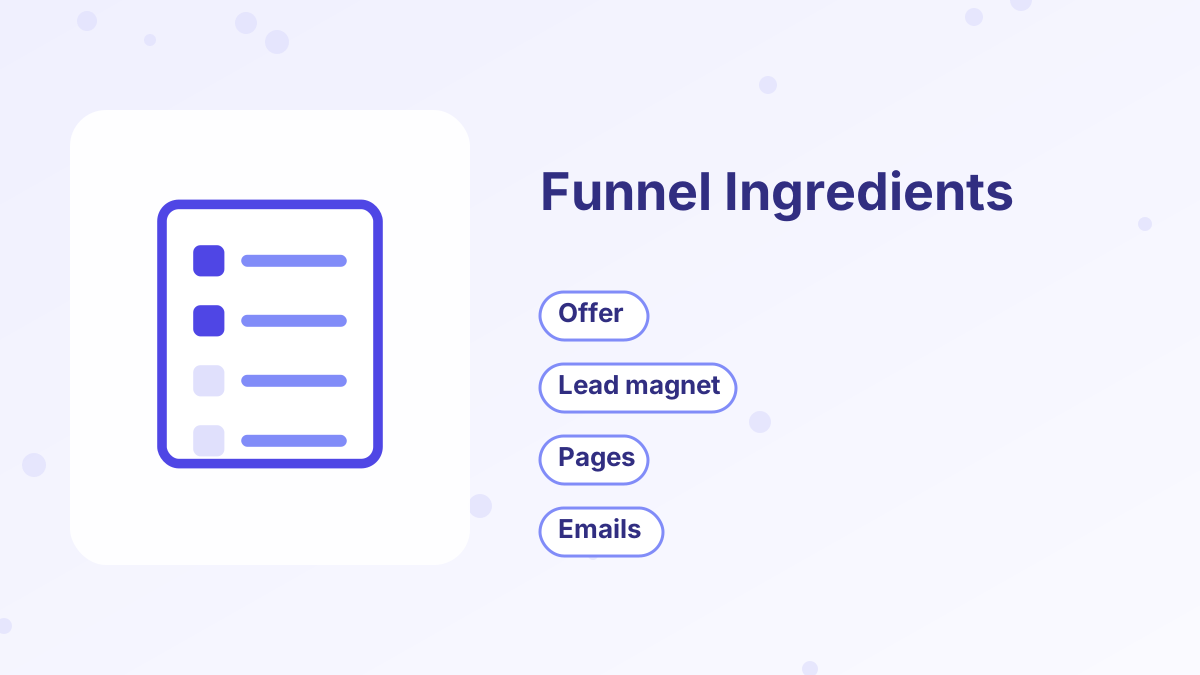
You don't need a big team or a complex setup to build your first funnel. You need five things:
| Building block | What it is | Example |
|---|---|---|
| An offer | Something people can buy | A $47 course or a coaching package |
| A lead magnet | A free resource related to the offer | A checklist or a 5-day email course |
| Funnel pages | Opt-in, thank-you, sales and checkout pages | Built from templates |
| An email sequence | Automated follow-up emails | A welcome series of 3 to 7 emails |
| A traffic source | Where visitors come from | Social media, search, partners or ads |
You can assemble these from separate tools, but an all-in-one funnel builder keeps pages, email, checkout and delivery in one place so nothing needs connecting. Systeme.io's free plan includes 3 funnels, 2,000 contacts, unlimited email sends and checkout, which is enough to build and test a complete first funnel. See how to build a sales funnel.
Common Sales Funnel Mistakes
The biggest mistake is building a complicated funnel before testing a simple one. Start with one lead magnet, one email sequence and one offer. Add upsells, webinars and extra paths only after the basic funnel converts.
The second mistake is a mismatch between the freebie and the offer. If your free checklist is about social media but your course is about email marketing, your subscribers won't be the right buyers. The lead magnet should solve a small part of the problem your offer solves fully.
The third mistake is no follow-up. Many people collect emails and then send nothing for weeks. A short automated welcome sequence that delivers value and introduces your offer is the engine of most small-business funnels. See welcome email sequence and lead magnet ideas.
Build Your First Funnel Free
Create an opt-in page, welcome emails and a checkout on systeme.io's free plan.
Try Systeme.io FreeSales Funnel FAQs
What is a sales funnel in simple terms?
It's the planned path someone takes from first finding you to buying, usually an opt-in page, follow-up emails and a sales page.
Why is it called a funnel?
Because many people enter at the top and fewer continue through each step, so the number of people narrows like a funnel.
Do small businesses need a sales funnel?
Yes. Even a simple funnel with one lead magnet, a few emails and one offer helps you sell consistently and see what's working.
What is the difference between a sales funnel and a website?
A website lets visitors explore many pages; a funnel guides them through one focused path toward a single action.
How much does it cost to build a sales funnel?
It can be free. Systeme.io's free plan includes funnel pages, email, checkout and 2,000 contacts.