Sales Funnel Stages - Awareness to Action, With What to Build at Each (2026)
The Sales Funnel Stages at a Glance
A sales funnel has four core stages: awareness, interest, decision and action. Each stage describes what a potential customer is thinking, and each needs a different kind of content to move them to the next step.
The model comes from AIDA, one of the oldest frameworks in marketing, which describes a buyer moving from attention to interest, desire and action. Modern marketers often add a fifth stage after the sale, retention, because keeping a customer is cheaper than finding a new one.
| Stage | Buyer mindset | Your goal | Key metric |
|---|---|---|---|
| Awareness | "I have a problem" | Get noticed by the right people | Visitors and reach |
| Interest | "Can you help me?" | Capture an email address | Opt-in rate |
| Decision | "Is this the right solution?" | Build trust and answer objections | Email clicks, sales page visits |
| Action | "I'm ready to buy" | Make buying easy | Conversion rate |
| Retention | "Was this worth it?" | Deliver value, sell again | Repeat purchases, refunds |
What it means for you: when sales are low, the stage model tells you where to look. Low traffic is an awareness problem. Lots of visitors but few subscribers is an interest problem. Lots of subscribers but few buyers is a decision or action problem.
Stage 1: Awareness
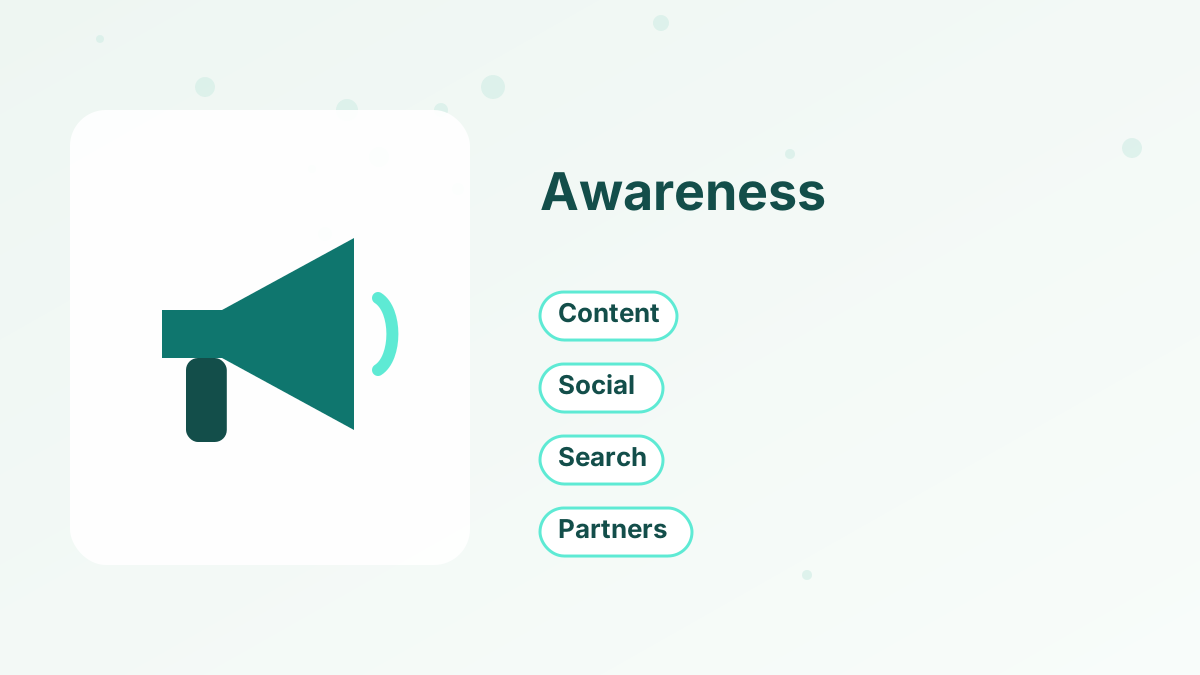
At the awareness stage, people discover you, often before they know they need what you sell. They might be searching for an answer, scrolling social media or listening to a podcast.
Your job here is to be useful and visible to the right audience. The best awareness content answers a real question your ideal customer has, which naturally attracts people with the problem your offer solves.
Content
Blog posts, videos and podcasts that answer questions your buyers ask.
Social Media
Short, helpful posts that point to a free resource.
Partnerships
Guest appearances, collaborations and affiliates who introduce you to their audience.
Paid Ads
Faster reach for a tested offer, best used once your funnel converts.
The most common awareness mistake is chasing broad attention. A post that reaches 100,000 people with no interest in your topic does less than one that reaches 1,000 people who have the exact problem you solve.
Stage 2: Interest
At the interest stage, a visitor wants to learn more. This is where you invite them into a relationship by offering a lead magnet, a free resource that solves a small, specific problem, in exchange for their email address.
The lead magnet and opt-in page are the heart of this stage. A strong lead magnet is quick to consume, clearly useful and closely related to what you sell. A checklist, template, short video series or mini-course works well. See lead magnet ideas.
Your opt-in page should be simple: a clear headline about the result, a few bullet points, and a form that asks only for what you need, usually just an email address. See squeeze page and opt-in forms.
What it means for you: the interest stage turns anonymous visitors into contacts you can follow up with. Without it, most visitors leave and never return.
Stage 3: Decision
In the decision stage, a subscriber is weighing whether your offer is the right solution. They're comparing options, considering price and looking for reasons to trust you.
Email does most of the work here. A welcome sequence delivers the lead magnet, then shares useful ideas, stories, results and answers to common objections over several days. Each email builds trust and naturally points toward your offer. See welcome email sequence.
- Deliver the promiseSend the lead magnet immediately and help them use it.
- Share a quick winGive one more useful idea that shows you understand their problem.
- Tell your storyExplain why your approach works and who it's for.
- Handle objectionsAddress price, time and "will this work for me?" directly.
- Present the offerLink to a sales page with a clear reason to act now.
A webinar, case study or free consultation can also serve the decision stage, especially for higher-priced offers.
Stage 4: Action
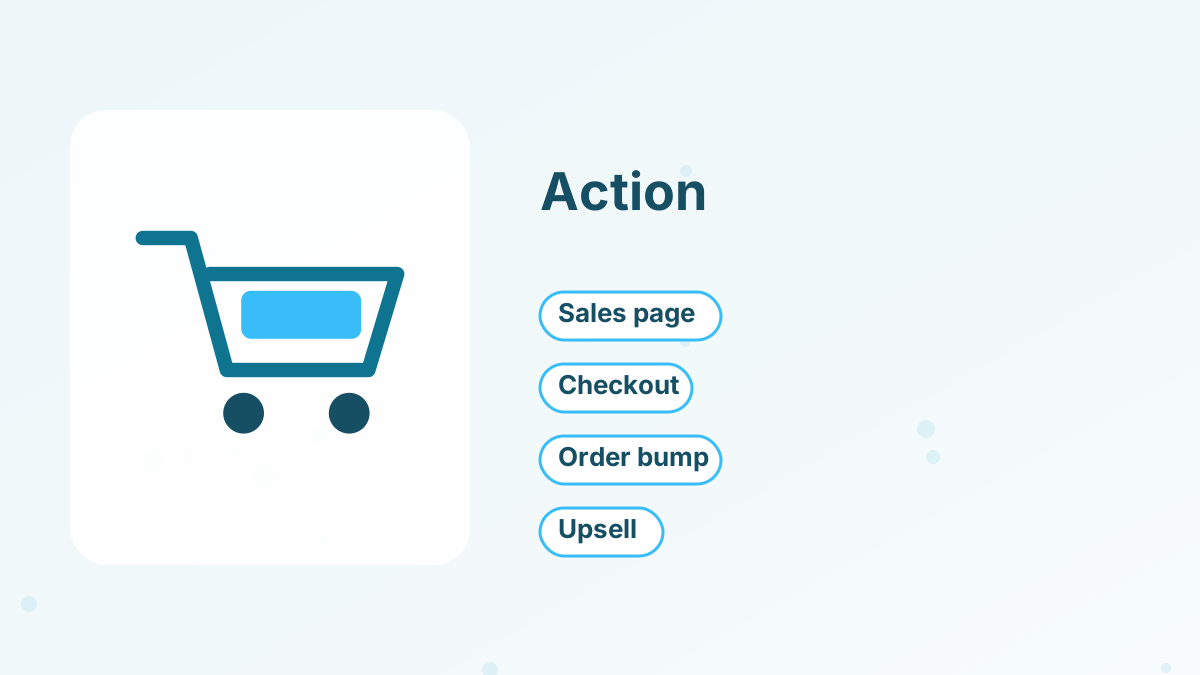
At the action stage, the person is ready to buy. Your job is to remove friction: a clear sales page, a simple checkout, the payment methods they expect and reassurance such as a guarantee.
This is also where you can increase the value of each sale. An order bump on the checkout page offers a small add-on with one click, and a one-click upsell after purchase offers a complementary product. Both raise revenue from the same buyers without extra traffic. See order bumps and upsells.
Common action-stage problems include a checkout with too many fields, missing payment options, surprise costs and slow pages. Test your checkout on a phone before you send traffic, because most buyers will use one.
Stage 5: Retention and Repeat Sales
The funnel doesn't end at the sale. A buyer who has a great experience is far more likely to buy again, refer friends and leave positive feedback.
Retention starts with delivery. Send access details immediately, welcome the customer, and help them get their first result quickly. Then keep the relationship going with helpful emails, new content and relevant next offers. See thank-you page and sales email sequence.
How the Stages Overlap in Real Life
Real buyers don't always move neatly from one stage to the next. Someone might discover you, read three posts, join your list, ignore your emails for a month, then buy on the day a friend recommends you. Others jump straight from awareness to action because a trusted source sent them.
That's fine. The stage model isn't a rule people must follow; it's a way to make sure you have something useful for people wherever they are. If you have content for every stage, each person can move at their own pace and still find the next step.
How to Map Your Own Funnel Stages
Write down what you'll use at each stage before you build anything. A simple map keeps your content focused and shows gaps.
| Stage | Content or page | Tool |
|---|---|---|
| Awareness | Weekly short videos answering client questions | Social media |
| Interest | Free "First 30 Days" checklist on an opt-in page | Funnel builder |
| Decision | 5-email welcome sequence with stories and a case study | Email automation |
| Action | Sales page and checkout with an order bump | Funnel builder and checkout |
| Retention | Onboarding emails and a booking link for a check-in call | Email and booking calendar |
This example is illustrative. An all-in-one platform like systeme.io can handle every stage after awareness in one account: the opt-in page, the email sequence, the checkout with an order bump and the booking calendar.
Measuring Each Stage
Each stage has a simple number to watch. Track visitors at awareness, opt-in rate at interest, email click rate at decision, and sales page conversion rate at action. When one number is unusually low, improve that stage first instead of rebuilding the whole funnel.
For example, if your opt-in page converts well but few subscribers click through to your sales page, focus on your emails. If many people visit the sales page but few buy, look at the offer, price, proof and checkout. See sales funnel metrics and improve funnel conversion rate.
Build Every Stage in One Place
Opt-in pages, email sequences, checkout and bookings on systeme.io, free to start.
Try Systeme.io FreeSales Funnel Stages FAQs
What are the 4 stages of a sales funnel?
Awareness, interest, decision and action, often remembered by the acronym AIDA.
What does TOFU, MOFU and BOFU mean?
Top, middle and bottom of the funnel. They group content by stage: attracting attention, nurturing leads and converting buyers.
Which funnel stage is most important?
Each stage depends on the others, but for most small businesses the interest stage matters first, because without subscribers there's no one to sell to.
How long does someone take to move through a funnel?
It varies by price and audience. Low-priced offers can sell in days; higher-priced offers often take weeks of follow-up.
Is retention part of the sales funnel?
Many marketers add retention as a fifth stage, because repeat buyers and referrals are a major source of revenue.