How to Start a Newsletter - Pick a Focus, Choose a Tool, Write the First Issue and Keep Going (2026)
Why Start a Newsletter?
A newsletter is a regular email you send to subscribers who want to hear from you. For creators, coaches, experts and small businesses, it's one of the simplest ways to build an audience you own, stay in touch with customers and create a dependable path to sales.
Unlike social media posts, newsletters land directly in inboxes, and they don't depend on an algorithm deciding who sees them. Readers who open your emails week after week get to know your thinking, which builds the kind of trust that makes selling feel natural.
The setup takes an afternoon. The real challenge is sending consistently, week after week. This guide covers both.
Narrow focus, simple format, steady schedule
Choose a specific topic and reader, pick a repeatable format, set up a platform and signup page, write your first issue and commit to a realistic schedule.
Step 1: Choose a Focus
A newsletter with a clear focus is easier to write and easier to grow. Define who it's for and what they'll get, in one sentence: "A weekly email for freelance designers with one practical idea for finding better clients."
Narrow is good. "Marketing tips" competes with thousands of newsletters; "email marketing tips for yoga studios" has a clear audience that will recognize itself immediately.
What it means for you: a specific promise makes people subscribe, and it makes your writing easier, because you always know what fits.
Step 2: Choose a Repeatable Format
The format is the structure each issue follows. A consistent format makes writing faster and reading easier.
One Big Idea
A short essay or lesson on one topic each issue.
Tip Plus Resource
One practical tip, one tool or resource, one short question.
Curated Links
A handful of useful links with your commentary.
Behind the Scenes
What you're working on, what you've learned and what's next.
Q&A
Answer one reader question in depth each issue.
Mixed
A short intro, one main section and a quick "also useful" list.
Pick one and stick with it for a while. You can evolve the format later as you learn what readers enjoy. A predictable structure also helps readers know where to find the part they value most, which keeps them opening issue after issue.
Step 3: Choose a Schedule You Can Keep
Weekly is a common rhythm, but consistency matters more than frequency. A dependable email every two weeks beats an ambitious daily plan you abandon after a month.
Choose a day and time, and keep it. Readers start to expect your email, and expectation builds engagement. If you need a break, tell readers in advance rather than disappearing; a short note about when you'll return keeps trust intact.
Step 4: Choose a Newsletter Platform
You need an email platform to collect subscribers, send issues and track results.
| If you want | Consider | Why |
|---|---|---|
| A newsletter plus courses, products or coaching | Systeme.io | Email, signup pages, checkout and courses in one place, 2,000 contacts free |
| A pure newsletter with a large free list | Kit | Free up to 10,000 subscribers for one user |
| A big list that you email occasionally | Brevo | Stores up to 100,000 contacts free, 300 emails a day |
These are free plan details as reported in 2026. If you plan to sell anything later, choosing a platform that includes selling tools now saves migrating. See the best free email marketing software.
Step 5: Set Up Your Domain and Signup Page
Use a sending address on your own domain and authenticate it, so your newsletter reaches inboxes. See email deliverability tips.
Then create a signup page that explains what readers get, how often and why it's worth it. Offering a small freebie, such as a starter guide or your best past issue as a PDF, gives people an extra reason to join. See opt-in forms and lead magnet ideas.
Step 6: Write a Welcome Email
Before your first issue, set up a welcome email for new subscribers. Thank them, tell them what to expect and when, link to a few of your best resources and invite them to reply with what they'd like help with.
As your newsletter grows, expand this into a short welcome sequence. See welcome email sequence.
Step 7: Write Your First Issue
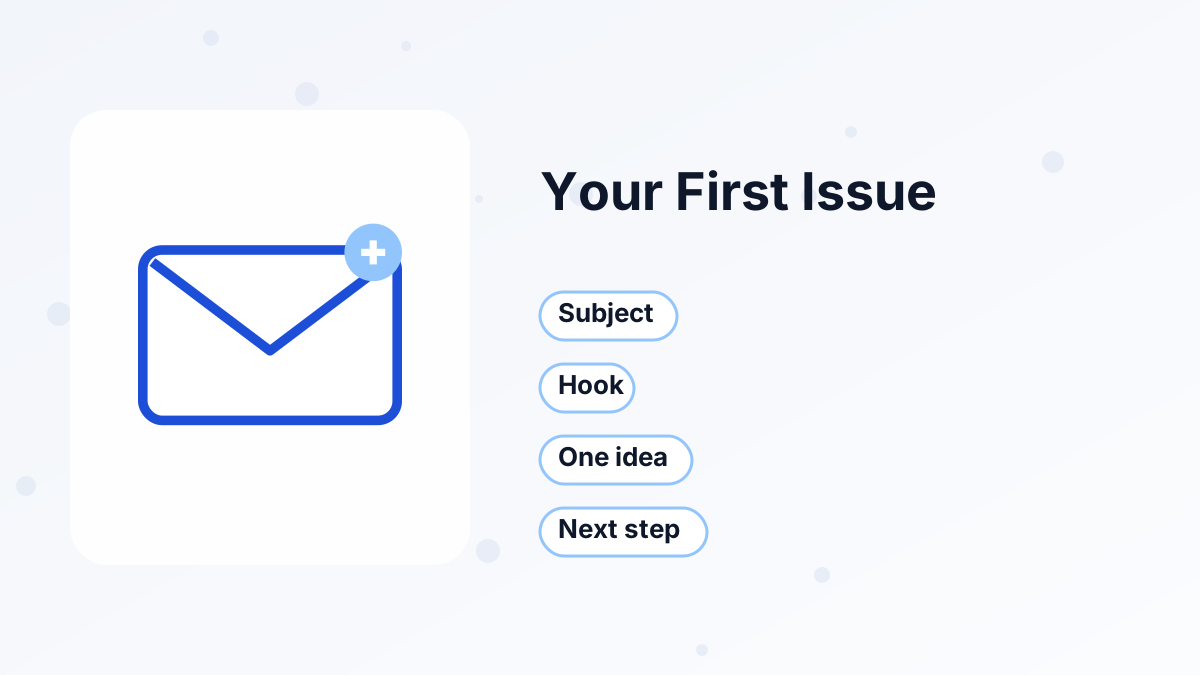
Don't overthink your first issue. Introduce the newsletter briefly, deliver one genuinely useful idea and end with a simple question or call to action.
- Subject lineTell readers what's inside, clearly and specifically.
- Opening lineGet to the point quickly with a relevant hook.
- Main contentOne idea, explained simply, with an example.
- Call to actionAsk a question, share a resource or mention your offer when relevant.
- Sign-offA consistent, personal close.
Keep paragraphs short and write as if to one reader. Then send it, even if your list is tiny. Early readers are often your most loyal.
Step 8: Grow Your Readership
Share Each Issue
Post a highlight on social media with a link to subscribe.
Collaborate
Recommend other newsletters and ask them to recommend yours.
Use Your Profiles
Put your signup link in every bio and email signature.
Create Search Content
Turn your best issues into articles that bring readers from search.
Ask Readers to Share
A simple "forward this to a friend who'd find it useful" helps.
Offer a Freebie
A useful lead magnet gives non-subscribers a reason to join.
Step 9: Earn From Your Newsletter
Once you have engaged readers, you can earn in several ways: selling your own products or courses, offering coaching or services, recommending tools as an affiliate with clear disclosure, or offering a paid tier with extra content.
Selling your own offers is usually the most profitable for small newsletters, because you keep most of the revenue and readers already trust you. An all-in-one platform makes this simple: link from an issue to a sales page and checkout in the same account. Systeme.io includes funnels, checkout, courses and an affiliate program alongside email, with 0% transaction fees. See how to sell digital products.
Newsletter Content Ideas
Running out of ideas is the main reason newsletters stop. Keep a running list of reliable idea starters, and add to it whenever something comes up during your week.
Reader Questions
Every question a reader or customer asks can become an issue.
Mistakes and Lessons
What didn't work, and what you'd do differently.
How-To Walkthroughs
A step-by-step explanation of a task your readers face.
Tool or Resource Reviews
What you use, why and who it suits, with honest pros and cons.
Myths and Misconceptions
Common beliefs in your field that deserve a better explanation.
Behind the Scenes
How you plan, create or decide, which readers often find fascinating.
Keeping Your Newsletter Going
Most newsletters stop because writing every week feels hard. Make it easier with a running list of ideas, drawn from reader questions, your work and things you've learned. Batch-write a few issues when you have time, or keep two evergreen issues ready as backups, so a busy week doesn't break your streak.
Track a few numbers, such as clicks, replies and subscriber growth, but don't obsess over them. Replies and forwarded emails are often the best sign your newsletter is working, because they show readers value it enough to respond or share.
Start Your Newsletter Free
Signup pages, welcome emails and unlimited newsletter sends on systeme.io.
Try Systeme.io FreeHow to Start a Newsletter FAQs
How do you start a newsletter?
Choose a focus, pick a format and schedule, set up an email platform and signup page, write a welcome email and send your first issue.
How often should you send a newsletter?
Weekly or every two weeks is common. Choose a schedule you can keep consistently.
Can you start a newsletter for free?
Yes. Systeme.io, Kit and other platforms offer free plans for getting started.
How do newsletters make money?
Through your own products, services, affiliate recommendations with disclosure, sponsorships or a paid subscription tier.
How long should a newsletter be?
Long enough to deliver one useful idea well. Many effective newsletters take only a few minutes to read.