How to Sell Coaching Online - Offers, Pricing, Booking and a Funnel That Builds Trust (2026)
Selling Coaching Is Selling a Result
People don't buy coaching hours. They buy a change: a new job, a healthier routine, a growing business, a calmer relationship with money. The coaches who sell online most easily describe that change clearly and show a believable path to it.
Online delivery makes coaching more flexible for you and your clients. You can work with people anywhere, run sessions by video, add recorded lessons and resources, and offer group programs that serve more people at once. But online buyers can't meet you before they pay, so your website, content and follow-up have to build the trust a face-to-face meeting would.
This guide covers how to turn your coaching into clear offers, price them, handle bookings and payments, and build a simple funnel that brings the right clients to you.
Productize your coaching and let a funnel build trust
Turn your coaching into a named package with a clear outcome, sell it through a sales page with booking and payment, and use a free resource plus email to build trust before the sales conversation.
Step 1: Package Your Coaching
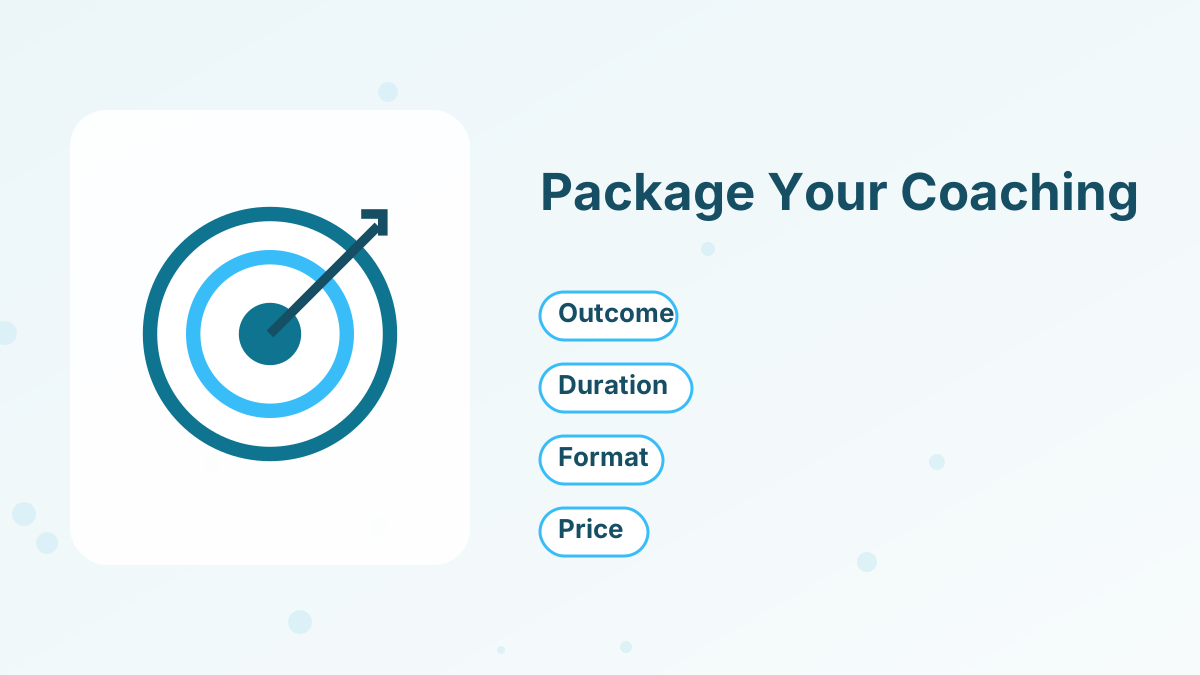
A coaching package is your service turned into a defined product. It has a name, a promised outcome, a set duration, a delivery format and a price. Packages are easier to explain, easier to buy and easier to deliver consistently than open-ended hourly sessions.
| Element | Example |
|---|---|
| Name | Career Pivot Sprint |
| Outcome | Land interviews in a new field within 12 weeks |
| Duration | 12 weeks |
| Sessions | Six one-to-one video calls |
| Support | Message support between sessions |
| Resources | Workbook, templates and short video lessons |
| Price | One fixed price or a payment plan |
What it means for you: when a prospect can see exactly what they get and where it leads, the sales conversation becomes about fit rather than convincing.
Step 2: Choose Your Coaching Formats
Different formats suit different budgets and stages. Many coaches offer two or three formats that form a natural ladder.
One-to-One Coaching
The most personal and highest-priced option. Ideal for complex goals and clients who want close support.
Group Coaching
Several clients follow the same program with live group calls. Lower price per person, more leverage for you.
Hybrid Programs
Recorded lessons plus live coaching calls. Clients learn at their own pace and get help applying it.
Intensives
A single half-day or full-day session for a focused problem.
Courses and Digital Products
Self-paced options for people who aren't ready for coaching yet. See how to sell digital products.
Community Memberships
Ongoing support and accountability after a program ends. See how to start a paid community.
A common ladder is a low-priced digital product, a group program in the middle and one-to-one coaching at the top. Each level introduces clients to the next.
Step 3: Price Your Coaching
Price based on the value of the outcome, the level of access and your market, not on an hourly rate. A package that helps someone land a better-paid job or grow revenue can justify a higher price than one focused on general motivation.
- Start with the outcomeWhat is the result worth to your ideal client?
- Factor in accessOne-to-one time and direct messaging cost more to deliver than group calls.
- Check your marketLook at what similar coaches charge for similar outcomes.
- Offer payment plansSplitting a higher price into monthly payments makes it more accessible.
- Raise prices with proofAs testimonials and results build up, increase your rates.
Avoid pricing by the session. When clients compare session prices, they focus on cost per hour instead of the change you help them make.
Step 4: Set Up Booking and Payments
Online clients expect to book and pay without back-and-forth emails. You'll typically need a booking calendar for discovery calls and sessions, a checkout for packages and a way to send reminders.
Systeme.io includes a booking calendar that connects with Google Calendar, Google Meet and Zoom, and it can take payment at the time of booking through Stripe, PayPal or Mollie. Pair it with a sales page, checkout with payment plans, a course area for your resources and email automation, all in one account with 0% transaction fees. See systeme.io booking calendar and systeme.io for coaches.
Test the full client path before launch: booking a call, receiving the confirmation, paying for a package and getting access to resources.
Step 5: Build a Trust-Building Funnel
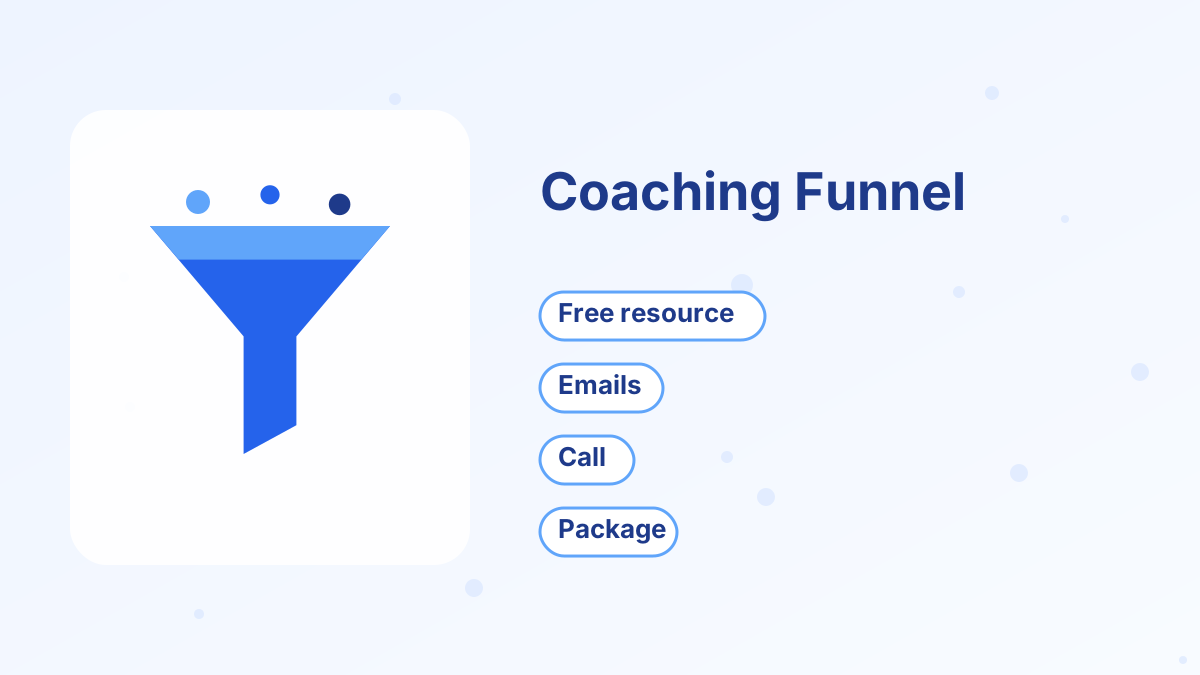
New coaches often send cold traffic straight to a sales page and wonder why nobody buys. Coaching is a trust purchase, so your funnel needs to show your thinking and results before asking for a commitment.
| Stage | What the prospect sees | Purpose |
|---|---|---|
| Free resource | A checklist, quiz, mini-training or workbook | Shows your approach and captures their email |
| Nurture emails | Lessons, stories and client results | Builds trust and explains your method |
| Invitation | A clear invitation to book a call or apply | Moves interested readers to a conversation |
| Discovery call | A short call to understand their situation | Confirms fit before they buy |
| Package checkout | A sales page and checkout or payment link | Makes saying yes simple |
A quiz can work especially well for coaches, because it segments prospects by their situation and lets you follow up with relevant advice. See quiz funnel and lead generation funnel.
Step 6: Run Helpful Sales Conversations
The discovery call isn't a pitch. It's a short conversation to understand where the prospect is, where they want to be and what's in the way. Ask more than you tell, and be honest when your package isn't the right fit.
When it is a fit, summarize what you heard, explain how your package addresses it and share the price and next step clearly. Send a follow-up email with the checkout link, so they can decide without pressure.
Step 7: Deliver and Collect Results
The best marketing for coaching is happy clients. Deliver what you promised, track progress with each client and ask for feedback during and after the program.
Collect testimonials when clients reach milestones, with their permission. Specific stories, such as what changed and how long it took, are more persuasive than general praise. Over time, these stories become the proof on your sales page and in your emails.
Scaling Beyond One-to-One
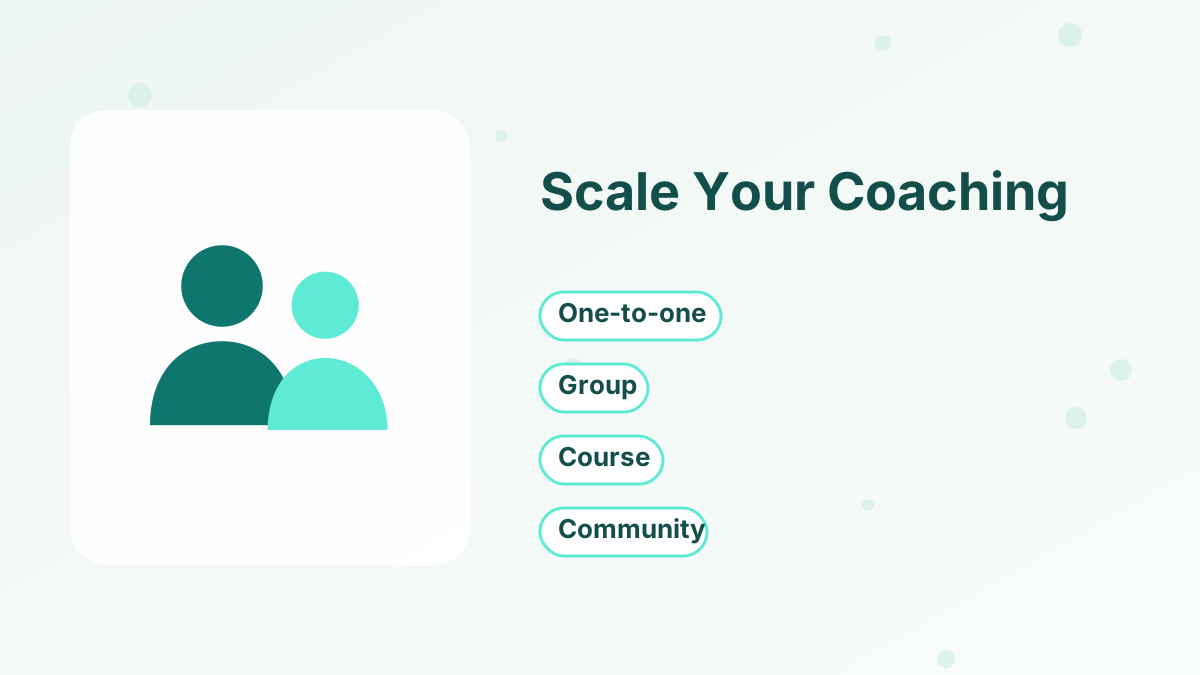
One-to-one coaching is limited by your calendar. Once you have a proven method, you can serve more people by adding group programs, recorded courses or a community. Many coaches keep a small number of premium one-to-one clients while most revenue comes from group and digital offers.
An all-in-one platform makes this easier, because your courses, community, funnels and email live in one place. See how to create an online course.
What to Put on Your Coaching Sales Page
Your sales page does the explaining that you'd otherwise repeat on every call. A clear page means prospects arrive at the discovery call already understanding the offer, so the conversation can focus on their situation.
| Section | What it answers |
|---|---|
| Headline and promise | What result does this help me reach? |
| Who it's for and not for | Is this meant for someone like me? |
| The problem | Do you understand what I'm dealing with? |
| Your method | How will we actually get there? |
| What's included | What sessions, support and resources do I get? |
| Proof | Has this worked for people like me? |
| Price and payment options | What does it cost and can I spread payments? |
| FAQs and next step | What happens after I book or buy? |
Keep the language in your clients' own words. Phrases from discovery calls and client feedback describe the problem far better than coaching jargon. See how to write a sales page.
Common Mistakes When Selling Coaching Online
Common mistakes include selling hours instead of outcomes, having a vague niche, sending cold traffic straight to a high-priced offer, skipping follow-up emails and underpricing out of nerves. Another is relying on one channel, such as a single social platform, instead of building an email list you control.
Sell Your Coaching With Systeme.io
Sales pages, booking calendar, payments, courses and email automation, free to start with 0% fees.
Try Systeme.io FreeHow to Sell Coaching Online FAQs
How do you sell coaching online?
Package your coaching around a clear outcome, set up booking and payments, and use a funnel with a free resource and emails to build trust before the sales call.
How much should online coaching cost?
It depends on the outcome, the access included and your market. Price packages by value rather than by the hour.
Do you need a certification to sell coaching?
Requirements depend on your country and topic, especially in health or therapy-related areas. Check local rules for your niche.
What platform do coaches use to sell online?
Many use an all-in-one platform like systeme.io for sales pages, booking, payments, courses and email.
Should you offer free coaching sessions?
A short discovery call helps confirm fit. Free full sessions can attract people who don't intend to buy, so use them carefully.